
A throwable axe that actually sticks comes down to balance, head shape, and how it leaves your hand. Get those right, and even your early throws land clean. Get them wrong, and it keeps bouncing off the board.
If you have ever thrown at a place like Montana Nights Axe Throwing, you already know the difference. Some axes feel easy within minutes, while others fight you the whole time.
This guide walks you through what works, what to avoid, and which picks are worth your money right now.
What Makes a Throwable Axe Actually Stick
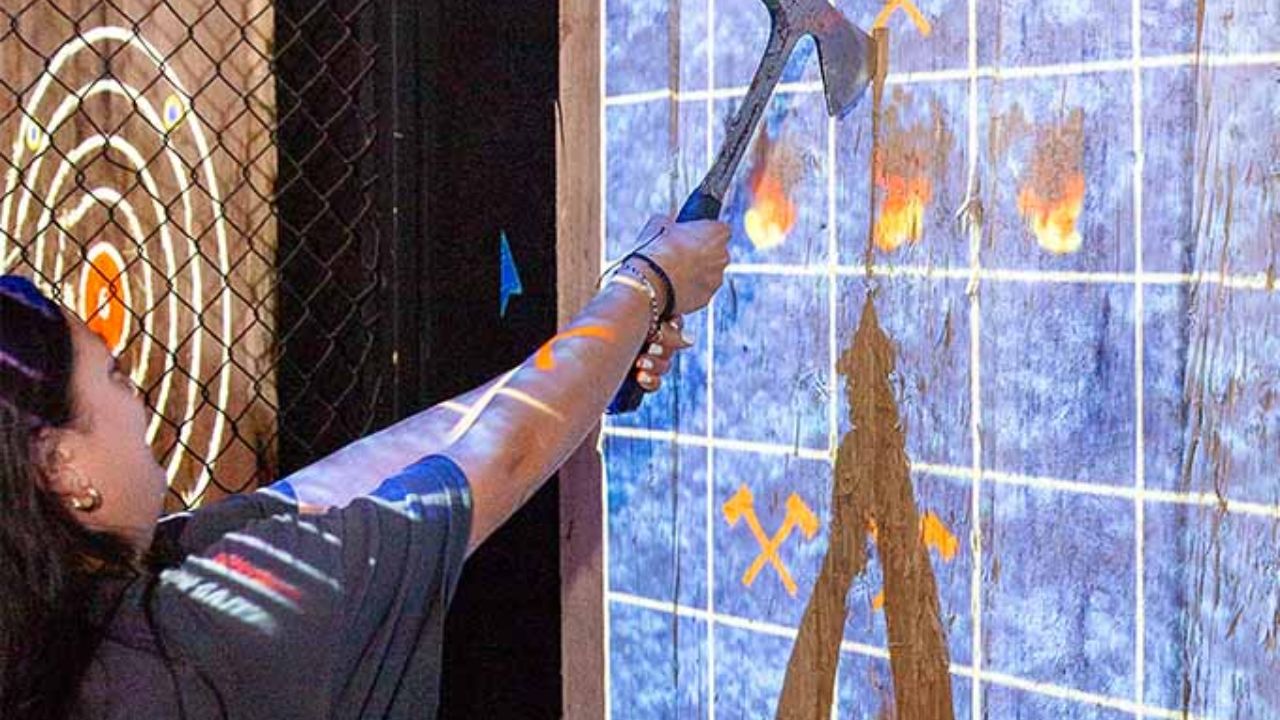
A sharp edge is not the reason your axe sticks. What really matters is the head profile and weight balance. A thin, slightly curved blade bites into wood fibers. But a thick wedge head pushes them apart. That push causes a bounce that can feel frustrating fast.
At most throwing venues, targets sit about 12 to 15 feet away. That distance favors a single clean rotation. If the axe is too light, it over-rotates, and if it is too heavy, it drops short. Some that are important here are the balance.
The handle material also plays a role. Wood absorbs small errors in your throw, whereas steel or fiberglass feels more rigid. That means less forgiveness when your release is off by a fraction.
The 7 Best Throwable Axe Picks (At a Glance)
Seven picks. One for each type of thrower.
- WATL Jack of Clubs – Best if you want fast, early success
- WATL Competition Thrower – Built for league-style throwing
- THRWCLUB 3-Pack – Best for practice volume at home
- Cold Steel Trail Hawk – Great if you want dual-use gear
- Estwing Double Bit – Strong build with long-term durability
- Smith & Wesson Combo – Entry option to test the waters
- WATL Kill Shot – Best for groups and heavy use setups
Now let’s break them down.
Pick #1 – WATL Jack of Clubs (Best Overall)
Most axes on this list serve two purposes, but the Jack of Clubs does not.
This axe is built only for throwing. The head uses a convex grind that bites into wood instead of glancing off it. That detail changes your first session when you throw the axe. People who struggle with bounce often stick within a few throws here.
The weight sits in a sweet spot for 12-15 feet throws, which makes rotation easier to control. Even if your release is slightly off, it still lands well.
If you are moving from casual nights to serious practice, this is a smart first upgrade. It feels stable right away, and that builds confidence fast.
Pick #2 – WATL Competition Thrower (Best for League Play)
Step into a league lane with this one, and it fits right in.
The straight handle is the key feature. There is no bottom curve to catch your palm, which means a cleaner release. Cleaner release means better rotation and better landing.
This axe follows WATL specs, which many venues use. If you plan to compete or train seriously, this matters. Because honestly, you want your practice tool to match the real setup.
Pick #3 – THRWCLUB Competition Axe 3-Pack (Best for Practice Volume)
How much time do you lose walking back after every throw? More than you think.
This pack solves that problem. Three axes mean three throws in a row, which keeps your rhythm steady. Rhythm builds muscle memory, and that is how you improve.
The steel holds up well under repeated impact. These are not delicate tools, but are meant for heavy sessions. If you plan to practice often, this is a smart move. One axe slows you down while three keep you in the zone.
Pick #4 – Cold Steel Trail Hawk (Best Tomahawk Option)
Not every thrower needs a dedicated axe. The Trail Hawk is a tomahawk, which means the head can come off the handle. That makes it easy to pack and carry. It also works for light outdoor use.
But here is the catch. It is not designed only for throwing. So it feels different, which is slightly less forgiving, and slightly more technique is required.
If you want one tool for both camping and throwing, this works well. If your focus is only on hitting targets, a pure throwing axe performs better.
Pick #5 – Estwing Double Bit Throwing Axe (Best US-Made Option)
The lifetime warranty is the real draw here. Estwing has built axes in the US for decades. The one-piece steel design makes it tough. It can take drops, misses, and rough use without damage.
The double-bit head gives you two edges. When one side dulls, flip it; that extends the use between sharpening sessions. The downside is that steel handles transfer more vibration, which can make early throws feel harsh. But if durability matters most, this is a solid pick. It lasts.
Pick #6 – Smith & Wesson Combo Set (Best Budget Entry)
This set is a good way to test if you enjoy axe-throwing. The build is decent for the price, and sticks often enough.
But it has limits where you may notice that the balance is not perfect. The feel is basic, but as your skill improves, you will notice the gap.
So think of this as a starting tool, not a long-term one. Use it to learn the basics, and then upgrade once you know you enjoy the sport.
Pick #7 – WATL Kill Shot (Best for Venues and Groups)
Venues do not use the best axe. They use the toughest one.
The Kill Shot is built for heavy use. The fiberglass handle handles drops, hits, and rough handling better than wood, which matters in group settings.
If you plan to host friends or build a home lane, this makes sense. Multiple people will use it, and not all will throw well. Durability becomes the top priority. It may not feel as refined as a competition axe, but it still works. That matters more in shared setups.
Throwable Axe vs Tomahawk – What the Labels Mean
The label on the box does not decide how it is thrown.
A throwable axe and a tomahawk can perform the same if the head shape and weight are similar. The real difference is the handle design. Tomahawks often have removable heads, while axes usually do not.
For casual throwing, this difference is small. You care more about balance and blade profile. If it rotates cleanly and bites well, it works.
So do not get stuck on the name. Focus on how it feels in your hand. That is what decides your results.
How to Choose Your First Throwable Axe
The biggest mistake is not buying the wrong axe. It is buying the wrong axe for your level.
If you are still learning your throw, go for something forgiving. A slightly heavier head and a wood handle help absorb small errors. You will stick more often, and that will soon build confidence.
Once your throw lands clean about 7 out of 10 times, you can move up. More precise axes reward consistency, but they also punish mistakes.
Think about your setup, too. Backyard throwing feels different from venue lanes. Also, targets vary, distance changes slightly, and these small details affect how an axe behaves.

If you are throwing for fun, this does not matter. Most venues, including places like Montana Nights Axe Throwing, guide you with house axes anyway.
Choose based on that.
Maintenance: Keeping Your Axe Sticking
Keep the edge right and the handle in good shape. Throwing dulls an axe faster than most expect. The dullness doesn’t come from cutting, but from impact. A quick sharpening every few sessions keeps performance steady.
Wood handles need care, too. Dry air can cause cracks over time. A light oil wipe every few months helps. That is it. You don’t need any complex routine or special tools. Simple upkeep works.
Final Thoughts
A good throwable axe does not need to look impressive. It needs to feel right and stick clean.
The right pick depends on where you are right now. Not where you think you should be. Start with something forgiving, build your throw, and then upgrade when it makes sense.
That is how progress actually happens.
FAQs
Q1: What weight is best for a throwable axe?
Most people do well with medium-weight axes. Around 1.5 to 2 pounds works well. It balances control and rotation.
Q2: Do sharper axes stick better?
Not always. Shape matters more than sharpness. A well-shaped blade sticks even if not razor sharp.
Q3: Is axe-throwing safe for beginners?
Yes, with proper guidance. Most venues teach the basics before you start. Follow rules and stay behind the line.
Q4: How far should you stand when throwing?
Usually about 12 to 15 feet from the target. That distance supports a single clean rotation.
Q5: Can you practice axe-throwing at home?
Yes, if you have a proper wooden target and a safe space. Always check local rules before setting up.