
Grip strength exercises are the fastest, most practical way to build a stronger grip for lifting, sports, outdoor adventures, and everyday tasks that demand real hand power.
If you have ever struggled to hold onto a heavy bar, felt your hands give up before your back or legs, or wondered why your forearms burn out so fast, this guide is for you.
We will start with the why, then walk through the how, and finally help you decide which exercises and grip strength equipment make sense for your goals.
Why Grip Strength Matters More Than You Think
Grip strength is not just about hands. It is a link between your brain and your entire upper body. When your grip fails, the lift ends, the climb stops, or the carry drops. It does not matter how strong your legs or back are if your hands cannot hold on.
People who train in grip strength exercises consistently notice benefits far beyond the gym. Daily tasks feel easier. Pull-ups improve, and deadlifts feel more secure. Even posture and shoulder control improve because the nervous system stays more engaged.
If you enjoy rugged competitive experiences, the kind Montana Nights is known for, grip strength becomes even more important. From exciting activities to arcade games, everything you find here offers something that will help your grip strength.
How to Think About Grip Strength Before Training
Before jumping into exercises or activities, ask yourself a few honest questions.
- Are your hands failing before your muscles?
- Do you lose bar control on rows or deadlifts?
- Do your forearms fatigue quickly on hikes or climbs?
- Are you training grip as an afterthought, if at all?
Grip strength comes in different forms. Crushing strength helps you squeeze. Holding strength helps you hang on. Pinch strength helps you control objects without handles. The best programs touch all three without overcomplicating things.
9 Best Grip Strength Exercises That Actually Work
These grip strength exercises are simple, proven, and easy to scale. You do not need to do all of them at once. Pick three or four and rotate them over time.
1. Axe Throwing for Functional Grip Power
Axe throwing might look like pure fun, but it quietly builds some of the most practical grip strength you can train. Holding an axe demands control, timing, and steady pressure rather than brute squeezing. If your grip slips or tightens at the wrong moment, the throw goes wild.
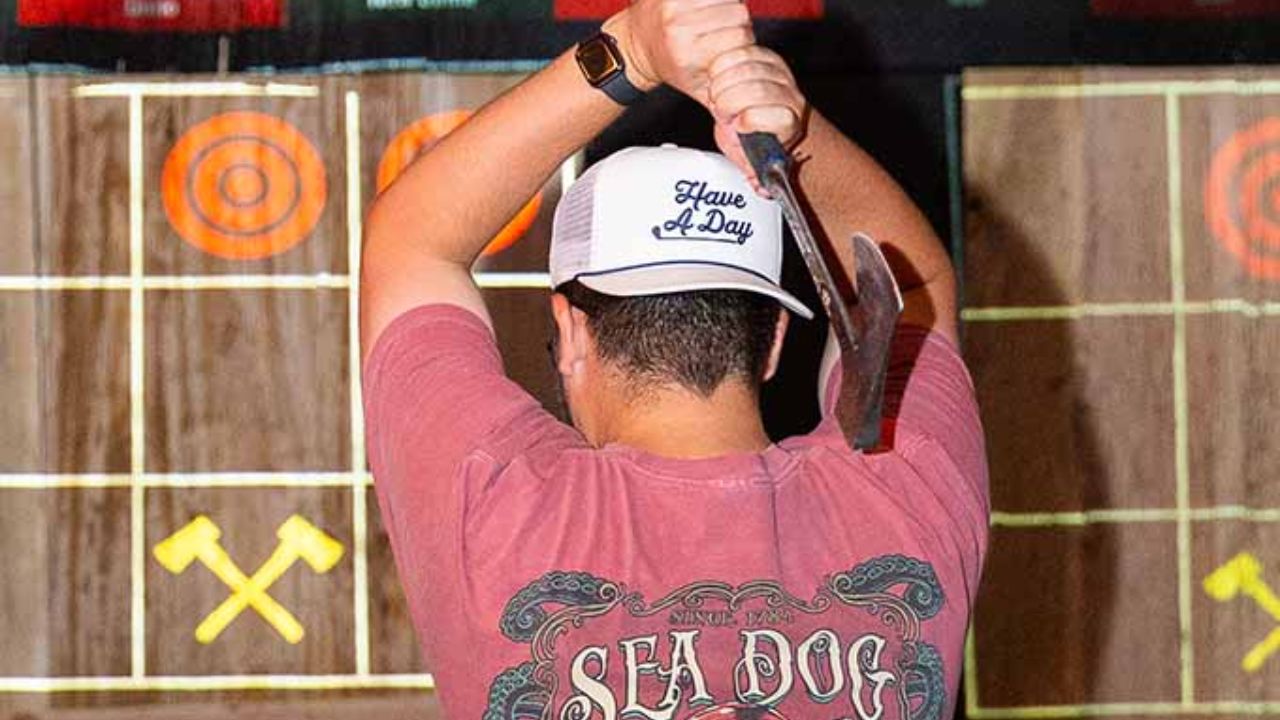
This is where grip strength exercises meet real-world application. At places like Montana Nights, axe throwing is not about muscle alone. It is about learning how to guide weight through your hands with confidence.
Why it works
- Trains dynamic grip control
- Builds wrist stability and forearm endurance
- Teaches relaxed but secure hand pressure
How to use it
- Focus on consistent grip pressure, not squeezing hard
- Keep wrists neutral during the throw
- Let repetition build endurance naturally
Many people notice something surprising here. After a session of axe throwing, bars feel easier to hold and carry feel more stable. Your hands learn to work with weight instead of fighting it.
This makes axe throwing a rare blend of grip training and experience-driven strength. It feels like play, but your hands know better.
2. Dead Hangs for Pure Holding Power
Dead hangs are one of the most honest grip tests out there. If your hands open, the set is over. No cheating. Hang from a pull-up bar with arms straight and shoulders engaged. Let your grip do the work.
Why it works
- Builds endurance in the hands and forearms
- Improves shoulder stability
- Requires no special grip strength equipment
How to use it
- Start with 20 to 30 seconds
- Work up to 60 seconds or longer
- Use a towel for extra difficulty
3. Farmer’s Carries for Real World Strength
Farmer’s carries feel simple until you try them. Grab weights, stand tall, and walk. This move trains the grip the way real life does. Carrying gear, groceries, or packs feels easier after consistent practice.
Why it works
- Trains grip under load
- Builds core and posture
- Transfers directly to daily tasks
How to use it
- Walk 30 to 60 feet per set
- Keep shoulders down and chest tall
- Increase weight slowly
4. Plate Pinches to Build Thumb Strength
Plate pinches train pinch grip, which many people ignore. This is the grip you use when holding flat or awkward objects. Pinch two weight plates together, smooth side out, and hold.
Why it works
- Strengthens thumbs and fingers
- Improves hand control
- Balances other grip styles
How to use it
- Hold for 15 to 30 seconds
- Switch hands each set
- Focus on steady pressure
5. Towel Pull Ups for Grip Endurance
Towel pull-ups are brutal in the best way. Loop towels over a bar and grip the fabric instead of metal. This removes friction and forces your hands to work harder.
Why it works
- Increases grip endurance fast
- Mimics rope or strap gripping
- Challenges coordination
How to use it
- Start with hang if pull-ups are hard
- Keep movements controlled
- Limit swinging
6. Barbell Holds After Heavy Lifts
Barbell holds are simple and effective. Load a barbell, lift it, and hold at the top. This is a great finisher after deadlifts or rack pulls.
Why it works
- Strengthens grip under fatigue
- Reinforces lifting confidence
- Requires minimal setup
How to use it
- Hold for 10 to 20 seconds
- Use weights slightly above working sets
- Rest fully between attempts
7. Hand Grippers for Focused Training
Hand grippers are classic grip strength equipment for a reason. They are portable, simple, and easy to track progress with. Squeeze the gripper fully and control the release.
Why it works
- Targets crushing grip
- Easy to use anywhere
- Great for volume work
How to use it
- Perform 10 to 20 reps per hand
- Focus on full range squeezes
- Avoid rushing reps
8. Wrist Roller for Forearm Control
The wrist roller looks old school, but it delivers. Roll the weight up and down using wrist motion only. You will feel this deep in the forearms.
Why it works
- Builds wrist and grip coordination
- Strengthens smaller stabilizers
- Improves endurance
How to use it
- Roll slowly in both directions
- Keep arms straight
- Rest before repeating
9. Thick Bar or Fat Grip Training
Using thick bars or fat grips forces your hands to adapt. Less wrap means more effort. If you do not have thick bars, fat grip attachments work well.
Why it works
- Increases hand activation
- Improves overall grip capacity
- Transfers to standard bars
How to use it
- Use lighter weights at first
- Apply to rows, curls, or carries
- Focus on control
How Often Should You Do Grip Strength Exercises
Grip recovers more slowly than big muscles. Training grip strength exercises two to three times per week works well for most people.
If your hands feel sore, stiff, or weak during other lifts, scale back. Progress comes from consistency, not daily burnout.
A simple rule works well. Train grip hard, then let it recover.
Do You Really Need Grip Strength Equipment
You can build strong hands without fancy tools. Bars, plates, towels, and bodyweight go a long way.
That said, grip strength equipment adds variety and convenience. Grippers, fat grips, and wrist rollers are affordable and effective if used with intention.

Think of equipment as support, not a shortcut. Here, even Montana Night’s axe-throwing tournaments go a long way. With the right throwing technique, it can really help you improve your grip strength as well as throwing strength. It will strengthen both your forearms and your shoulders.
Common Mistakes People Make With Grip Training
Many people overdo grip work or train it only when something feels weak. Both approaches slow progress.
Watch out for these mistakes.
- Training grip every day without rest
- Ignoring thumb and pinch strength
- Using straps for everything
- Rushing reps without control
Grip strength grows when the nervous system adapts. That takes patience.
Final Thoughts to Sit With
Grip strength exercises are not flashy, but they quietly change how capable you feel in your body. The question is not whether grip training works. It is whether you are willing to train it with the same respect you give everything else.
So when your hands start to fatigue, will you see it as a limit or as the next skill worth building?