
Choosing the best throwing axe comes down to balance, weight, handle feel, and how confidently the axe sticks into the target, not price tags or flashy looks.
That’s the short answer.
The longer, more useful one is below.
If someone is serious about axe throwing, whether for backyard practice or league nights, the axe matters more than most people expect. The wrong one slips, over-rotates, or just feels off. The right one feels like an extension of the arm. Clean release. Solid stick. No second-guessing.
This guide walks through the full decision process step by step, the same way experienced venues and coaches think about it, including how Montana Nights Axe-Throwing chooses axes that work for beginners and seasoned throwers alike.
Why Choosing the Best Throwing Axe Matters More Than Skill at First

Most beginners assume missed throws mean poor technique. Sometimes that’s true. Often, it’s the axe.
A poorly balanced axe fights the thrower. It spins too fast, lands flat, or bounces back. That frustration builds fast. On the flip side, a well-chosen axe forgives small mistakes and builds confidence early.
This is why venues that host first-timers every day are intentional over axe selection. At Montana Nights, the goal is not intimidation. It’s a quick success. When people stick an axe in their first few throws, smiles follow. Drinks taste better. Games last longer.
So, before worrying about trick shots or kill shots, the focus should be on choosing the right tool.
What Makes the Best Throwing Axes Actually Work
An axe that throws well does three things consistently. It rotates smoothly. It releases cleanly. It sticks without forcing the throw.
Those results come from a few simple elements working together.
Weight That Feels Controlled, Not Heavy
Most throwing axes weigh between 1.5 and 3 pounds, including the handle. Lighter axes rotate faster. Heavier axes hit harder but punish poor timing.
For most people, especially those just starting, the sweet spot sits around 1.75 to 2.25 pounds. That range allows enough force to stick without tiring the arm.
This is why many venues standardize around this weight. It works across all different body types and skill levels.
Balanced Head and Handle
Balance is the silent deal breaker. A head heavy axe drops too fast. A handle-heavy axe floats and slaps the board.
The best throwing axes feel neutral in hand. When an axe is held near the grip, the axe should not tip dramatically forward or backward. That balance creates predictable rotation.
At Montana Nights, axes are tested repeatedly before being approved for lanes. If a tool feels inconsistent across throwers, it gets retired.
Handle Length That Matches the Throw Style
Handle length affects rotation speed. Short handles spin fast. Long handles slow things down.
Most throwing axes land comfortably in the 13 to 16 inch handle range. This length works for one-handed throws and allows smooth rotation without rushing the release.
Longer handles feel tempting, but add complexity for beginners. Shorter handles demand precision. Moderation wins here.
Blade Shape and Edge Profile Matter More Than Sharpness
A common myth says sharper axes stick better. In reality, sharpness plays a smaller role than shape.
Throwing axes use a slightly rounded edge. An axe that is too sharp will lead to blade chips or glances. If an axe is too dull it will bounce. The blade should be thin enough to bite into soft wood but thick enough to survive repeated impact.
A consistent edge beats a razor edge every time.
Why Handle Material Affects Accuracy and Comfort
Most throwing axes use wood handles, and for good reason. Wood absorbs shock. It flexes slightly. It feels alive in the hand.
Hickory remains the gold standard. It’s strong, flexible, and affordable. If a handle breaks, it’s replaceable. That matters for regular practice.
Composite and steel handles exist. They are more durable than wooden handles, but some players find them to feel harsher.
This is why many professional lanes offer the option of wood handles despite higher replacement rates. Comfort beats longevity when people are learning.
How Montana Nights Chooses the Best Throwing Axe for Guests
Montana Nights does not pick axes based on trends. They pick based on what works on busy nights with mixed skill levels.
Axes are chosen after testing with:
- First-time throwers
- League players
- Different throwing distances
- Softwood targets are replaced frequently
If an axe sticks consistently across those conditions, it earns a place on the wall.
The staff also watches behavior. Axes that cause frequent bounce backs or wrist strain get removed. Safety and enjoyment guide every choice.
That same logic applies at home. If an axe feels unpredictable or tiring, it’s not the best fit, even if reviews say otherwise.
Is Price a Reliable Signal of Quality?
Not always.
Many solid throwing axes sit in the mid-price range. Expensive axes often focus on design or niche competition needs. Budget axes sometimes cut corners on balance.
The real question is value. Does the axe perform well throw after throw?
Experienced throwers often say this. Spend enough to get consistent materials and balance. Skip the rest.
How Target Wood and Axe Choice Work Together
An axe does not work alone. The target matters.
Soft woods like cottonwood or poplar accept blades easily. Hard woods punish mistakes. A beginner using a hard target and the wrong axe will struggle no matter what.
This is why venues rotate boards often. Fresh wood gives fair feedback.
When choosing an axe, think about where it will land. Backyard pine boards demand a forgiving axe. Competition lanes allow sharper profiles.
Maintenance Habits That Keep Throwing Axes Reliable
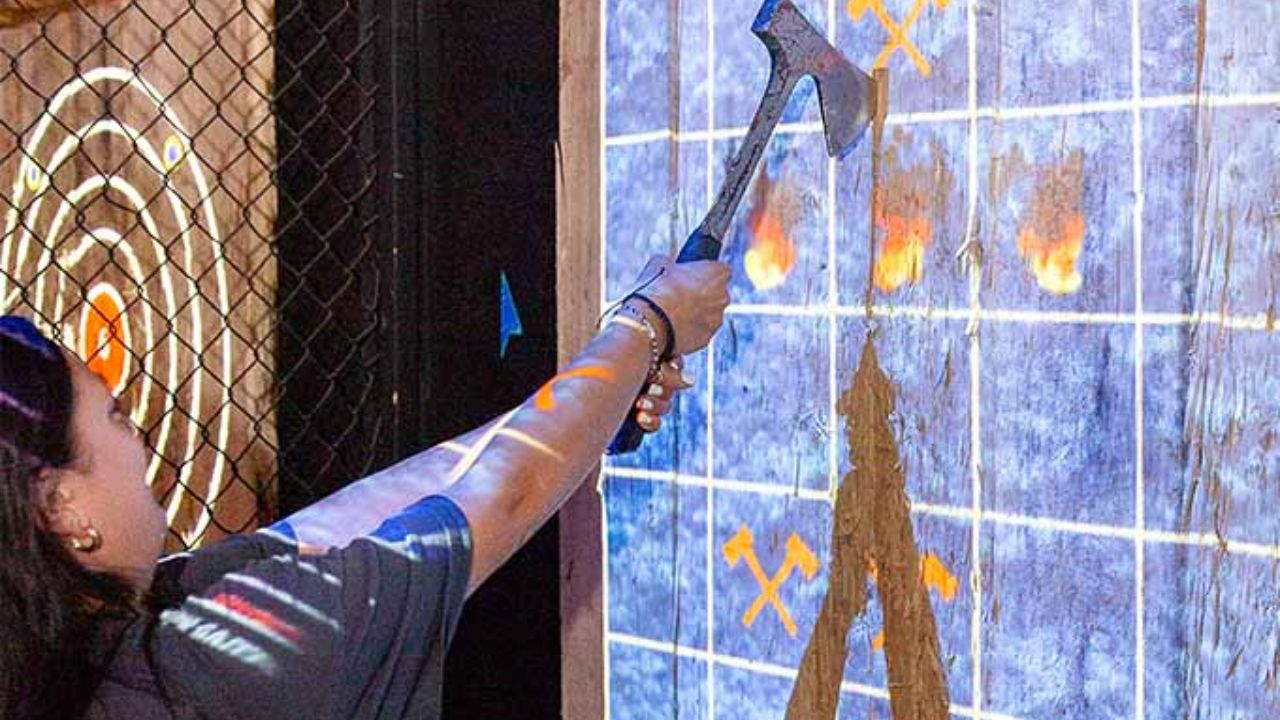
Even the best throwing axes lose performance without care.
A few habits make a big difference.
- Light sanding removes burrs
- Occasional edge tuning keeps the bite consistent
- Handle oil prevents drying and cracking
- Storage away from moisture preserves balance
Axes used at Montana Nights get inspected often. Small issues get fixed before they become safety risks.
Key Decision Moments Most People Ignore
This is where real thinking happens.
- Is this axe comfortable after ten throws, not two?
- Does it feel predictable when tired?
- Would a guest enjoy using this axe?
- Is this worth replacing handles over time?
These questions separate impulse buys from smart choices.
The best throwing axe is not the one that looks good on a wall. It’s the one that still feels right after a long session.
Choosing the Best Throwing Axe Is About Trust
Trust builds when the axe behaves the same way every time. Venues like Montana Nights Axe-Throwing understand this deeply. That’s why their axes feel approachable, balanced, and forgiving. They remove friction so people focus on fun.
If an axe helps build confidence, it’s doing its job.
So the real question becomes this. “Do you want an axe that looks impressive, or one that quietly helps every throw land where you aimed?”
FAQs
Q1: Which is the best overall throwing axe?
WATL Jack of Clubs is known as the best overall throwing axe.
Q2: What’s the ideal length of the axe handle?
Ideally, the axe handle should be between 13 to 17 inches.
Q3: What kind of materials are best for axe handles?
For beginners, molded fiberglass is great, whereas people usually prefer the traditional wood for the best balance and feel.