
Official axe-throwing target dimensions are simple, standardized, and easy to follow once you know the logic behind them.
A regulation target is four to five 2×10 boards, totaling roughly 36-48 inches in height and 24-36 inches in width, with a clearly marked bullseye and scoring rings placed at specific distances from the floor.
If you are setting up a lane, buying a session, or judging whether a venue does it right, these measurements matter more than most people realize.
Also, if you’re planning to book an axe-throwing night at a place like Montana Nights, we’ll help you understand the dimensions. We will walk through why these numbers exist and how they affect your throw, your safety, and your fun.
Axe Throwing Target Dimensions Explained Simply
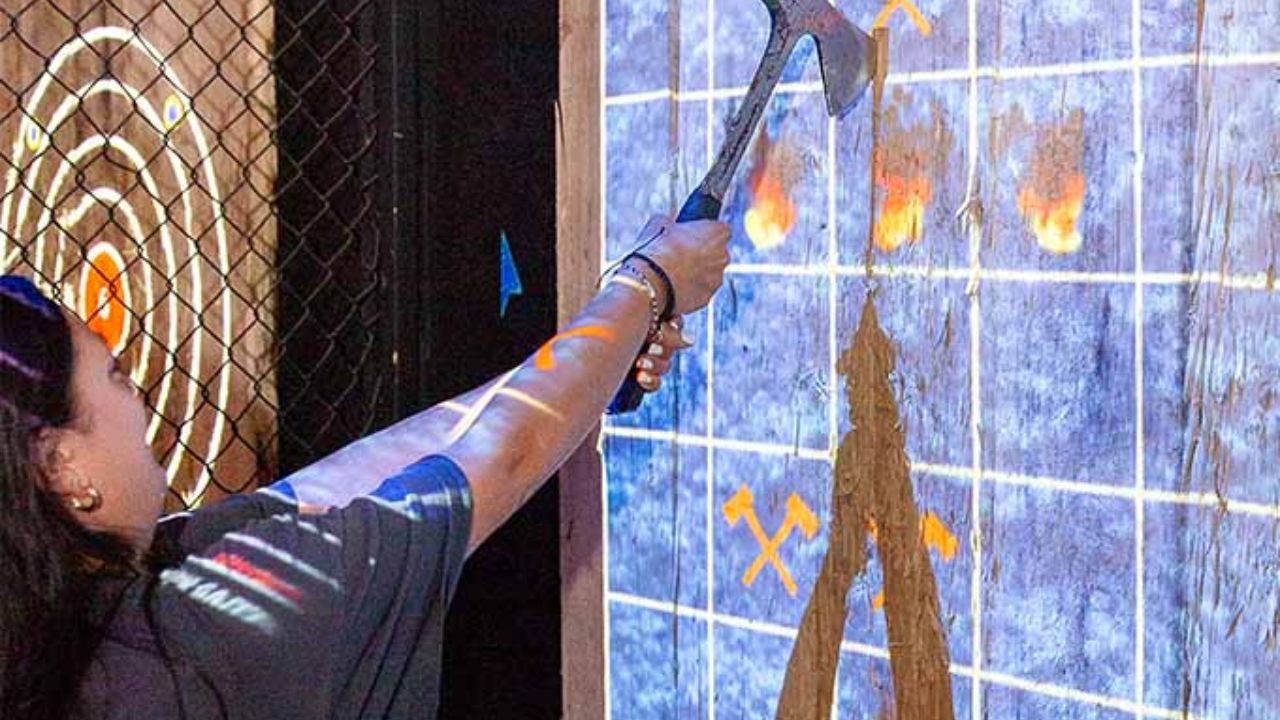
A standard axe-throwing target measures 36 to 48 inches in height and 24 to 36 inches in width. That square wooden surface is not random. It is large enough to catch wild throws but compact enough to reward accuracy.
The center of the bullseye sits 63 inches from the floor, measured to the middle of the circle. This height lines up with the natural shoulder and arm motion of most adults. When targets sit lower or higher, throws feel awkward and inconsistent.
Here is the quick breakdown most leagues and serious venues follow.
- Total target size: 24 to 36 inches wide x 36 to 48 inches tall
- Bullseye diameter: 7 inches
- Inner ring diameter: 17 inches
- Outer ring diameter: 27 inches
- Bullseye center height: 63 inches from the floor
These measurements come from standards used by major leagues like WATL and IATF. Most professional coaches agree that these are the best axe-throwing target dimensions for consistency and fairness.
Why Axe Throwing Target Dimensions Matter More Than You Think
At first glance, a target is just wood on a wall. But dimensions shape how the axe rotates, sticks, and scores.
If the target is too small, beginners constantly miss and lose confidence. Too big, and accuracy stops mattering. The perfect measured square strikes a balance that feels fair on your first throw and is still challenging after twenty.
Height matters just as much. If a bullseye is placed too low, it forces a downward throw. On the other hand, too high makes you muscle the axe. Either way, you fight the target instead of learning clean form.
When venues get this right, throws feel natural. When they do not, people blame themselves. That is why experienced throwers always check the target setup first.
Official Scoring Rings and What They Mean for Your Game
Scoring zones are not decoration. They guide your eye and train your aim.
Most targets include three main scoring areas.
- Bullseye at the center, usually worth 5 points
- Inner ring around it, often worth 3 points
- Outer ring, typically worth 1 point
Some leagues also add a small corner dot called a kill shot. It is usually about 3 inches wide and sits near the top corners. These shots are worth 8 points. While casual venues may skip this to keep things relaxed, Montana Nights allows things to get a bit more exciting by adding this scoring area.
If you are throwing for fun, scoring is optional. But even then, proper ring spacing helps your brain lock onto a clear goal. It is the same reason dartboards have strict dimensions.
Throw Line Distance and Why It Changes Everything
Target dimensions only work when paired with the correct throwing distance.
Most venues place the throw line 12 to 15 feet from the target face. This distance allows a full axe rotation using a smooth, relaxed throw. Too close, and the axe overrotates. Too far, and it lands flat.
From experience, beginners usually do best around 12 feet. Taller or stronger throwers sometimes step back. Good venues allow small adjustments while keeping the target fixed.
If you ever wonder why your axe hits the handle first, distance is usually the culprit, not your aim.
Is This Setup Beginner-Friendly or Intimidating?
This is the question everyone asks quietly.
Yes, official axe-throwing target dimensions are absolutely beginner-friendly. They are designed that way. The large square catches misses. The bullseye size is forgiving. The height feels natural within minutes.
Places like Montana Nights build their lanes to these specs because they want first-timers to stick axes fast. When you hear laughter and cheering after the first few throws, that is not luck. It is a good setup.
And once you get comfortable, the same dimensions still challenge you. Accuracy becomes the game, not survival.
How Montana Nights Uses Axe Throwing Alongside Other Activities
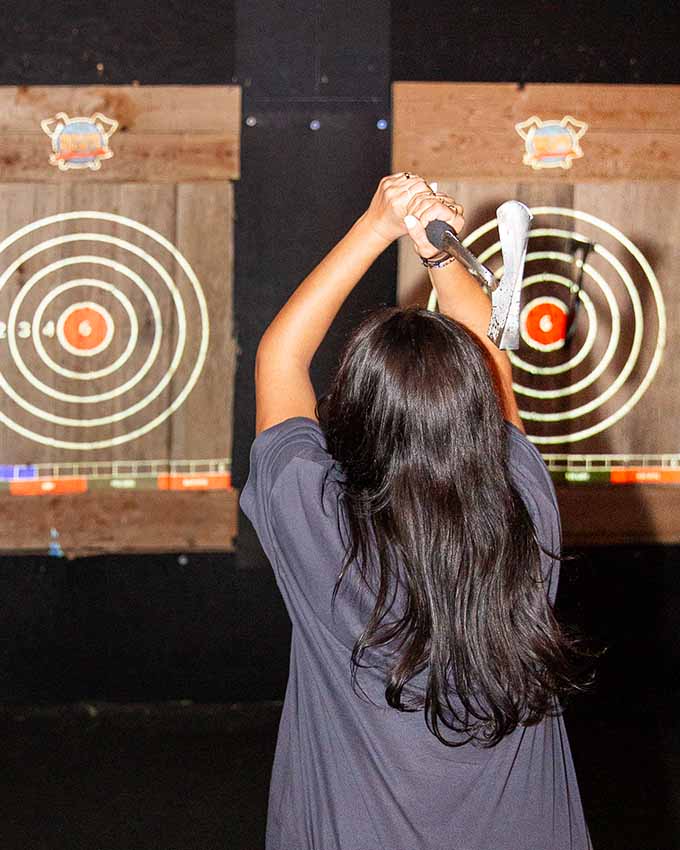
One thing that’s most appreciated about Montana Nights is how axe throwing fits into a bigger experience. It is not treated as a standalone stunt.
You might start the night with axe throwing, learning the basics, and competing with friends. Then you move into a rage room, where precision gives way to pure stress release. The contrast works because both activities are physical but scratch different itches.
That balance only works because axe throwing follows proper target dimensions. Otherwise, frustration bleeds into the rest of the experience.
Choosing the Best Axe Throwing Target Dimensions for Home Setups
If you are thinking of building a target at home, copy the official dimensions exactly. Do not scale down unless space forces you to.
Here are smart tips most experts agree on.
- Use end-grain wood if possible. Cottonwood or pine works well
- Keep the 48-inch square intact, even if you reduce the ring size
- Mount the target securely so it does not bounce
- Measure bullseye height from the floor, not from the target bottom
Many backyard targets fail because people eyeball measurements. Axes do not leave room for any errors. Precision matters when you’re engaging in an axe-throwing activity.
Safety Considerations Tied Directly to Dimensions
Safety is essential in these measurements.
A larger target reduces bounce outs. When the target is at a proper height, it prevents downward ricochets. Correct distance controls rotation speed.
Professional venues also add side walls and floor markings. But it all starts with the target itself.
If you ever walk into a place where the target looks tiny or oddly placed, trust your gut. Good axe-throwing feels controlled, not sketchy.
Common Myths About Axe Throwing Targets
There are a few ideas that just refuse to die.
- Bigger targets make throwing easier. They usually make it worse
- Higher bullseyes mean better accuracy. They usually cause overthrows
- Any wood works the same. It absolutely does not
These myths spread because axe-throwing looks simple. It is simple to start, but it is not sloppy. Once you throw on a properly sized target, you feel the difference instantly.
Is Axe Throwing Worth the Money When Done Right?
If a venue follows official axe-throwing target dimensions, trains staff, and pairs the activity with other experiences like rage rooms, the value shows fast. You are not paying to toss metal. You are paying for flow, safety, and that quiet thrill when the axe sticks dead center.
At places like Montana Nights, that feeling is what people remember. Not the score, not the photos, but the moment when everything lines up and the axe lands clean.
And once you know what proper setup feels like, you never settle for less again.