
Looking to amp up your backyard space or your bar? Setting up an axe-throwing target could be a really exciting way to do that!
Axe-throwing is an exciting activity to do. Whether you’re building confidence or just looking for a fun way to spend time with your friends or families, an axe-throwing competition can really touch the spot.
When you’re throwing the axe, you want it to stick cleanly without chewing through boards or your budget. Therefore, wood choice matters more than axe weight or throwing power.
If you are wondering, “Which wood should I actually use?” you are already on the right path. Below, we’ve listed the top five axe-throwing target woods, why they work, where they fail, and how to choose what fits your setup.
Why Target Wood Choice Matters More Than You Think
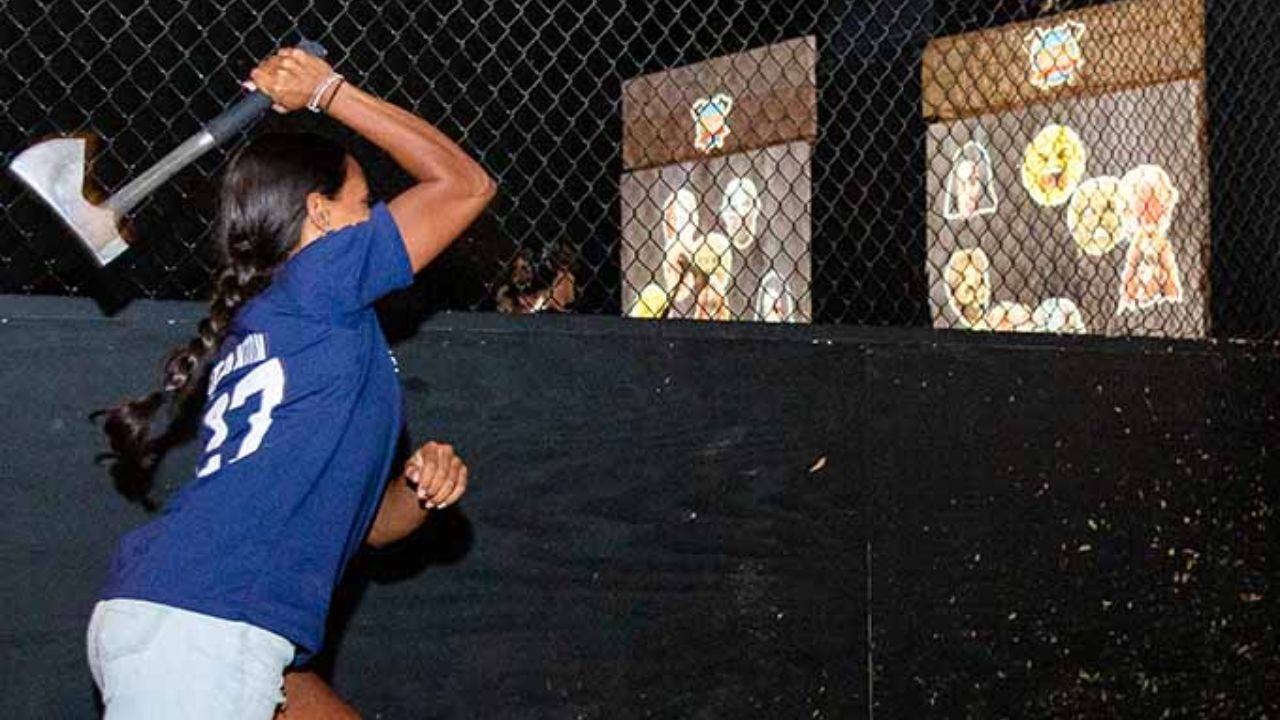
Axe throwing may look simple. You throw the axe, hit the target and viola! You have the perfect score. But truly, more than your skill, the wood behind that target decides whether the axe sticks or ricochets.
This is why professional venues pay as much attention to targets as they do to their axe throwing equipment, because both work together to shape safety, accuracy, and confidence.
Soft woods absorbs impact and forgives imperfect throws. Hard woods fight back and punish mistakes. The wrong wood makes beginners think they are bad throwers when the problem isn’t skill at all. The right wood builds confidence fast, which is why commercial venues obsess over this detail.
What Makes a Good Axe Throwing Target Wood?
How do you understand what kind of wood is good for axe-throwing? Good target wood has three main traits.
- Soft grain that allows axe blades to bite
- Straight fibers that reduce bounce-back
- Low cost, so boards can be replaced often
Durability matters, but not in the way most people assume. You want wood that sacrifices itself slowly. A board that looks rough but still catches axes is doing its job.
A common question comes up early.
“Should I choose the strongest wood so it lasts longer?”
No. Strong woods resist penetration. That resistance sends axes back toward the thrower, which is unsafe and frustrating.
Top 5 Axe Throwing Target Woods (Soft, Easy to Stick, Low-Cost)
You must now have an idea about why axe-throwing target woods are important. But what are the best wood options for this activity? Let’s have a look at it:
1. Cottonwood (The Gold Standard)
Let’s start with the best! The one that excels on everyone’s list is the cottonwood. Cottonwood is known to be the best all-around axe-throwing target wood. It is soft, consistent, and forgiving, even for new throwers.
Axes sink into cottonwood with less force, which means fewer bounce-outs and more satisfying sticks. The grain compresses instead of splintering, helping boards last longer than their soft feel suggests.
This is not a theory. Montana Nights Axe Throwing uses cottonwood for its targets, sourced locally and milled for consistent performance. Commercial venues choose cottonwood because it balances safety, cost, and play quality better than almost anything else.
Why cottonwood works so well:
- Soft fibers grip axe blades easily
- Minimal bounce-back risk
- Affordable and easy to replace
- Ideal for beginners and group play
If you want the safest choice with the fewest regrets, start here.
2. Poplar (The Reliable Runner-Up)
Poplar behaves a lot like cottonwood, which is why many venues use both. It is slightly firmer, but still soft enough to accept axe blades cleanly.
At Montana Nights, poplar is also used interchangeably with cottonwood, depending on local availability. From a thrower’s perspective, the difference is subtle. From a maintenance perspective, poplar holds shape a bit longer.
Poplar makes sense if cottonwood is hard to source locally. It performs well in high-traffic lanes and holds screws and backing boards firmly.
Reasons poplar stays popular:
- Smooth, even grain
- Slightly longer lifespan than cottonwood
- Still soft enough for clean sticks
- Easy to source in many regions
For serious hobbyists or DIY builders, poplar is a smart second choice.
3. Pine (Budget-Friendly and Easy to Find)
Pine gets mixed reviews, mostly because not all pine is equal. Soft pine varieties work well for axe-throwing. Dense pine does not.
When you get the right cut, pine is affordable and widely available at lumber yards. It sticks axes reasonably well, though boards may wear unevenly over time.
Pine is often used by home builders who want to experiment without spending much money. It works, just not as gracefully as cottonwood or poplar.
Pine works best when:
- Budget is tight
- Targets are replaced often
- Boards are rotated regularly
Think of pine as a training ground. It gets the job done, but it shows wear faster.
4. Spruce (Light, Soft, and Underrated)
Spruce flies under the radar, but it deserves attention. It is light, soft, and accepts axe blades easily when fresh.
The downside is durability. Spruce dents quickly and may require frequent board rotation. Still, for casual setups or temporary targets, it performs better than many expect.
Spruce is often bundled with pine and fir under SPF lumber. If you inspect boards carefully and avoid dense cuts, spruce can be a quiet winner.
Why do some throwers like spruce:
- Very soft on impact
- Low axe bounce risk
- Often inexpensive
It is not glamorous, but it works when chosen carefully.
5. Fir (Only the Softer Cuts)
Fir sits at the edge of what works. Some fir boards are too dense. Others behave just soft enough to be usable.
Fir requires more effort to throw cleanly, which can frustrate beginners. For experienced throwers, it is manageable. For mixed-skill groups, it is less forgiving.
If fir is your only option, choose boards with wide grain spacing and minimal knots. Rotate often and expect faster blade dulling.
Fir can work if:
- Softer cuts are selected
- Throwers have decent control
- Safety spacing is generous
It is not ideal, but it can serve in a pinch.
Woods to Avoid (Even If They Look Durable)
Hardwoods feel tempting. They look solid. They last longer. They also bounce axes.
But this is exactly what you need to avoid. Woods like oak, maple, and hickory, resist penetration and increase rebound risk. They turn missed throws into safety hazards.
Choosing something flashy but rigid often leads to disengagement. Flexibility creates better outcomes, whether in wood or social settings.
How Montana Nights Chooses Its Target Wood

Montana Nights Axe Throwing focuses on experience first. Targets are built using cottonwood and poplar, both harvested locally and milled for consistency. Boards are often replaced and rotated to keep surfaces fresh.
Why does that matter? Because axe-throwing is not just about hitting wood. It is about confidence, flow, and enjoyment. People throw better when targets behave predictably.
Add in a cold beer, arcade games, and pizza nearby, and the experience feels relaxed instead of intense. That environment encourages repeat visits and better throws.
Maintenance Tips That Extend Target Life
Even the best wood fails without care, and you wouldn’t want to spoil a good wood target for your axe-throwing skills. Simple habits make a big difference.
- Rotate boards to spread wear
- Lightly mist dry boards to reduce cracking
- Remove broken fibers before they snag blades
These small steps keep targets safe and consistent.
A Quick Note on Choosing the Best Axe-Throwing Target Wood
If the goal is clean sticks, you’ll have safer throws and a better experience overall; the wood you choose quietly decides the outcome. So the real question becomes simple. Do you want a target that looks tough, or one that actually works?
The wood supports that process by being a good target and removing frustration. It lets people focus on the moment, not the mechanics. And that’s just what a night at Montana Nights Axe Throwing also gives!
FAQs
Q1: How to make the target last longer?
To make the target last longer, try to keep the wood wet. You can soak the wood or spray it with water every 10 minutes to keep it pliable.
Q2: What are the official dimensions of the target?
The official dimensions of a target are 36 inches in diameter. The bullseye is usually 1.5 inches.
Q3: Is wood worth replacing often?
Cheap soft wood should be replaced regularly.
Q4: Which woods should be avoided for axe-throwing target wood?
You should refrain from using oak, maple, or other hardwoods, as you could experience excessive bounce-back, which could also damage axe blades.