
You were just looking for exciting things to do in Newington and stumbled upon an activity at Montana Nights, which is axe-throwing. It sounded intriguing to you, but now you’re not sure where to begin your axe-throwing journey.
Axe throwing might look easy. It might seem like you just have to throw an axe at the target, but it’s much more than that. While you need both skills and luck, you also need to understand the equipment that is used in axe-throwing.
If you’re wondering what those equipment are, we’ll help you find it. As beginners, you only need nine core items to start strong with axe-throwing, and once you understand why each one matters, buying the right axe throwing equipment becomes simple and stress-free.
Below are nine must-have items that give you a solid, safe, and fun start.
1. A Beginner-Friendly Throwing Axe
This one is obvious! For axe-throwing, you need a beginner-friendly axe to start off with. And no, you do not need a giant lumberjack axe.
Most beginners do best with a hatchet weighing between 1.25 and 1.75 pounds. A 14 to 16-inch handle gives good balance and control. If you go too heavy, your arm tires fast. Too light, and the axe won’t rotate cleanly.
Why does weight matter so much? Because axe throwing is about rhythm, not force. When you throw, you want one smooth rotation before it hits the board. A well-balanced hatchet makes that easier to learn.
Montana Nights Axe Throwing provides axes weighing 1.5 to 3 pounds, which is ideal for beginners. So, if you ever want to start your axe-throwing journey at a professional space, Montana Nights could be a great start.
2. A Safe Wooden Target Board
You can’t practice without a proper target. And drywall does not count.
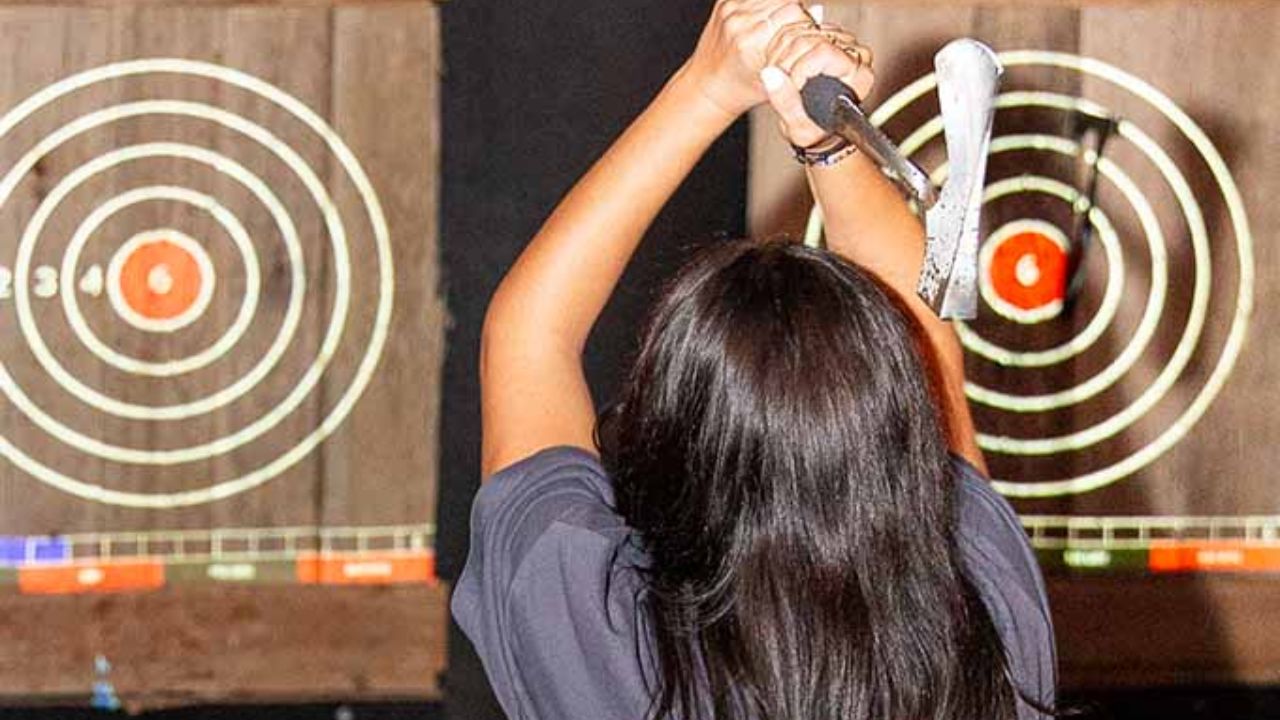
Most setups use softwood like cottonwood, poplar, pine, or spruce. End-grain boards last longer because the axe sinks between fibers instead of cutting across them. If you’re building one at home, stack vertical boards tightly together and replace them when they get chewed up.
Here’s what you want in a target:
- Solid wood, not plywood
- At least 4 feet by 4 feet surface
- Clear scoring rings painted on
- Secure backing so nothing wobbles
A shaky target ruins practice. Worse, it increases bounce-back risk. And trust me, seeing an axe bounce toward you once is enough to make you respect proper setup.
3. Protective Closed-Toe Footwear
This one is simple, but many don’t bother about it. While axe-throwing, you must wear sturdy, closed-toe shoes. Never wear sandals or flip flops.
You never know, but axes can fall. Even experienced throwers drop them during warm-ups. A solid leather boot or work shoe protects your feet from injury.
If you’ve ever visited a professional range like Montana Nights Axe Throwing, you’ll notice closed-toe shoes are mandatory. That rule exists for a reason because safety is not optional in this sport.
4. A Quality Axe Sheath
Most beginners forget this. They toss their axe into a bag unprotected. But that’s not how it should be kept.
A blade sheath keeps the edge sharp and prevents accidents when transporting your gear. Leather or thick plastic works well. Look for one with a secure snap or strap.
This matters especially if you plan to drive to events or outdoor locations. An exposed blade sliding around in your trunk is a bad idea.
5. Sandpaper or Sharpening Stone
Sharp axes stick better, and dull ones bounce, however good your throw is.
You do not need a razor edge like a chef’s knife. But you do need a clean, consistent bevel. A simple puck-style sharpening stone works well for beginners. Some throwers even carry medium-grit sandpaper to touch up small dents.
It’s just like tuning a guitar where small adjustments keep performance smooth.
6. Measuring Tape for Regulation Distance
Standard throwing distance is usually around 12 to 15 feet, depending on league rules. If you practice too close or too far, you train bad habits.
Use a tape measure once. Mark your line clearly, and stick to it.
7. Chalk or Grip Tape
Sweaty hands can ruin clean releases. And beginners tend to grip too tightly already.
Chalk keeps your hands dry. On the other hand, grip tape adds texture to wooden handles. Both improve control without forcing you to squeeze harder.
8. A Guided Axe Throwing Session
Here’s where many beginners hesitate. Do I really need coaching? Can’t I just watch YouTube?
You can watch videos. But a live instructor corrects mistakes instantly. At Montana Nights Axe Throwing, trained coaches walk you through stance, grip, and release step by step. They adjust your form in real time.
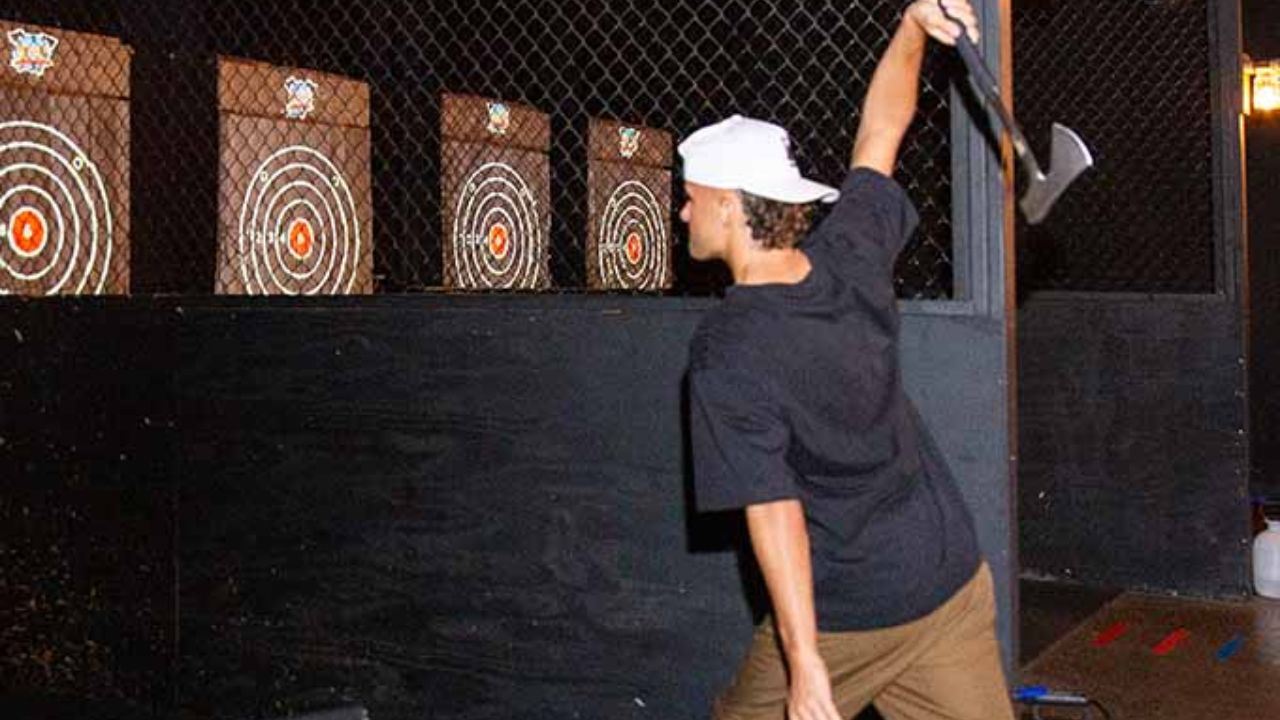
That feedback speeds up learning more than any gear upgrade ever will. One session can fix months of bad habits.
And let’s be honest. It’s also more fun. You get games, structured scoring, and a safe environment. If you’re unsure whether this hobby is worth the money, a guided experience is the smartest first step before buying full axe throwing equipment for home.
9. A Private Axe Throwing Event Package
Sometimes the best “equipment” is the environment you train in.
Booking a private session through gives you uninterrupted lane time and personalized instruction. You don’t have to wait; there’s no pressure, and you’re focused on practicing and having fun.
If you’re planning a birthday, team event, or bachelor party, this offering combines learning and social energy. And when you throw in a group, you improve faster.
How to Decide What to Buy First
If you’re staring at a shopping cart wondering where to begin, keep it simple.
Start with:
- A beginner axe
- A safe target
- Closed-toe footwear
- A sheath
Everything else can come after a few sessions. Buying all the axe-throwing equipment at once feels exciting. But it’s smarter to build gradually.
Common Beginner Mistakes
However much you try not to make any mistakes, it can happen unintentionally. We’ve seen these again and again:
- Buying a heavy, cool-looking axe
- Throwing too hard instead of focusing on rotation
- Standing at random distances
- Ignoring blade maintenance
- Skipping safety basics
Axe throwing is not about brute strength. It’s timing, smooth motion, and consistency. When you respect the basics, progress feels almost automatic.
Why the Right Axe Throwing Equipment Matters
Good gear builds confidence. Confidence builds consistency. And consistency builds skill.
If you start with poor balance, dull edges, or unstable targets, you get easily frustrated, and you might think you’re bad at the sport. In reality, the setup is working against you.
That’s why even professional venues carefully select their tools. The goal is simple, which is to make it easy for beginners to succeed.
And once you stick your first clean bullseye, something clicks. The sound alone is addictive. So if you’re serious about trying this, don’t overthink it. Get the basics. Book a guided session. Practice with purpose. Then upgrade slowly as your skills grow.