
Axe throwing bars have grown fast across the U.S. over the last decade. You’ll now find venues in nearly every major metro area. Places like Montana Nights Axe Throwing combine guided axe throwing sessions with private event spaces, food, drinks, and other entertainment options.
In this guide we’ll see what exactly axe throwing bars are and what you should know before you book a session here.
What is an Axe Throwing Bar?

An axe throwing bar is a venue where you can throw axes at wooden targets while enjoying a social setting that often includes drinks, food, games, and private events.
Most axe throwing bars are safe, fun, worth the money, and beginner-friendly, making it a fun gathering and hangout place.
1. What Happens on a Typical Visit (From Arrival to Last Throw)
When you walk into any axe throwing bar, the first thing you can expect is a waiver. Most venues ask guests to sign a liability form, check age requirements, and confirm footwear. Then you’ll be assigned a lane and introduced to an axe coach.
The first few minutes often feel awkward, but that’s normal. Many people worry about looking silly. But then the coach demonstrates a basic throw from about 12 to 15 feet away.
The first throw often misses the target completely. Sometimes the axe hits the wood and drops straight down. But after a few attempts, things start to click. The coach may suggest stepping forward a few inches if the axe lands handle-first.
If it over-ivots, a small step back usually helps. Most guests stick an axe within their first 10 to 15 throws. Then the fun begins.
2. The Safety Briefing: What It Covers and Why You Can’t Skip It
The safety briefing is the only part of the visit where you need full attention. Many people assume it’s a formality. But it isn’t. Every rule exists because someone learned a lesson the hard way.
Axe throwing venues are designed around predictable movement. The targets, lanes, and throwing lines all serve a purpose. Also, sometimes an axe can bounce and a bounced hatchet does not travel in a straight line. That’s why coaches repeat certain rules every session. Know this first.
Key rules include:
- Stay behind the throwing line: It keeps players spaced safely.
- Wait until all axes stop moving: Axes can bounce unexpectedly.
- Throw only when your lane is clear: This prevents collisions.
- Wear closed-toe shoes: Dropped axes and exposed feet never mix well.
3. What Alcohol Actually Looks Like at an Axe Throwing Bar
You’re not choosing between throwing axes and having a drink. At many venues, both happen together.
Most axe throwing locations that serve alcohol operate under strict policies. Typical venues limit consumption while actively throwing. Coaches monitor players throughout the session. Some locations use wristbands or drink tracking systems. If someone appears impaired, they stop throwing.
The reason is simple. A liquor license and guest safety matter too much to risk. If it sounds strict, well it is but for your own safety. Guests still enjoy beer, wine, or cocktails, but the environment stays controlled.
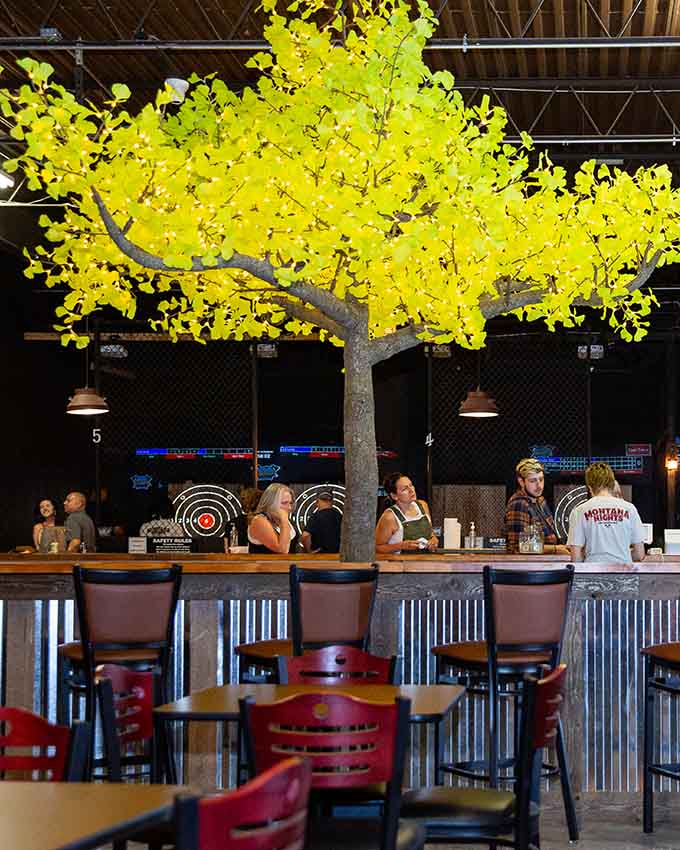
Montana Nights Axe Throwing, for example, combines axe throwing with a full bar and food offerings, creating a social setting rather than a sports-only venue. Guests can throw, grab a drink, and spend time with friends in one location. But everyone is monitored when they’re in the venue.
4. BYOB Venues vs. Full-Bar Venues: Which One to Book
There are two types of axe throwing venues, and they’re more different than many people expect. Some allow guests to bring drinks, while others operate with a full-service bar.
A BYOB location often costs less overall. But somebody has to buy the drinks, transport them, and keep them cold. For a group of four friends, that’s easy enough. For a bachelorette party of 15? Not so much. In many cases, a bar with axe throwing and a full liquor license removes a lot of planning headaches.
For larger groups, the full-bar option often wins.
5. How Much Does It Cost and What Affects the Price?
Most sessions cost between $25 and $40 per person. That range hides a few things worth knowing.
A standard one-hour session often falls inside that price range. Weekday afternoons can be cheaper. Friday and Saturday evenings usually sit at the higher end. Also, private bookings may cost slightly more but often include dedicated lanes and a dedicated coach.
Another cost people forget? Tipping. Many guests tip their axe coach about $5 to $10 per person. Coaches spend the session teaching, scoring games, and helping everyone improve. The tip is appreciated.
Typical pricing looks like this:
- Weekday public session: $20-$30 per person
- Weekend public session: $30-$40 per person
- Private event booking: $35-$55 per person
- League play or repeat programs: Often discounted rates
Always check before booking.
Montana Nights Axe Throwing keeps its pricing fairly straightforward. Most standard axe throwing sessions are priced at $35 per person plus tax and include approximately 75 minutes of throwing time with guidance from a certified AxeMaster.
6. Age Requirements: What Changes When There’s a Bar Involved
The age limit at an axe throwing bar isn’t one number. It’s often two or three different numbers.
Many venues allow teens to throw with a parent or guardian present. Others set higher minimum ages. Once alcohol enters the picture, restrictions often tighten. Evening sessions may follow different rules than daytime sessions. That’s where people get confused.
Planning a mixed-age group? Call the venue first. A 17-year-old cousin may be welcome at a daytime event but not at a late-night session. The rules usually reflect the venue’s alcohol setup rather than the throwing activity itself.
7. Group Events: Birthday Parties, Bachelorettes, and Corporate Bookings
The bachelorette party booking is where many groups make the same mistake. They reserved public lanes when they really wanted a private setup.
Private lanes keep everyone together. That’s useful when the goal is celebrating rather than meeting strangers. Birthday groups often enjoy the extra space too. The atmosphere feels more relaxed.
Corporate outings are different. Some companies book entire venues while others reserve multiple lanes and run team tournaments. Friendly competition works surprisingly well when coworkers leave the office behind.

Montana Nights Axe Throwing specializes in private events alongside its axe throwing sessions. Corporate groups, birthday parties, bachelor parties, and bachelorette celebrations are common bookings. Private event spaces give groups a dedicated area and a more personalized setup.
8. What to Wear and What Gets You Turned Away at the Door
Closed-toe shoes are the one thing that can stop your visit before it starts. Most venues enforce this rule without exceptions.
Beyond footwear, comfort matters. You’ll be moving your arms repeatedly. Tight jackets, loose sleeves, and bulky accessories can get annoying fast. Athletic wear works well in this case.
A good outfit checklist:
- Closed-toe shoes
- Fitted shirt or top
- Jeans or athletic pants
- Minimal jewelry around wrists
9. What If You’re Terrible at It? (You Won’t Be for Long)
Never thrown an axe before? Good. Neither have most people walking through the door.
The first throw often bounces. The second may miss. The third might hit the outer ring. Then something changes. The motion starts feeling natural. The coach offers one adjustment, and suddenly the axe sticks. That’s the moment people remember.
If you’re too worried about embarrassment, just remember, most guests are too busy focusing on their own throws to notice yours.
10. Is It Actually Worth the Money?
Axe throwing combines competition, movement, conversation, and a little stress relief. For many guests, the value comes from the mix.
Throwing axes for an hour is fun. Adding food, drinks, arcade games, or private event space turns it into a full evening. That’s why repeat visits are common at entertainment centers like Montana Nights.
Before booking, check the age policy, confirm the alcohol rules, and wear closed-toe shoes. Everything else usually becomes clear in the first fifteen minutes.
Final Thoughts on Choosing an Axe Throwing Bar
An axe throwing bar is no longer a niche activity reserved for adventure seekers. It has become a social destination where friends, families, coworkers, and celebration groups can compete, laugh, and spend quality time together.
The best part? Most people walk in wondering if they can stick an axe into a target. They leave wondering when they can come back and do it again.
FAQs
Q1: Is axe throwing safe for beginners?
Yes. Structured venues use trained coaches, designated lanes, and mandatory safety briefings. Most injuries are prevented by following simple lane rules.
Q2: Can you drink alcohol while axe throwing?
Many venues allow alcohol with restrictions. Drink limits, coach supervision, and venue policies help keep the activity safe.
Q3: What should you wear for axe throwing?
Closed-toe shoes are required at most venues. Comfortable clothing with free arm movement works best.
Q4: Is axe throwing hard to learn?
Not really. Most beginners stick an axe within 10 to 15 throws after a few coaching tips.
Q5: How far in advance should you book?
Weekend sessions often fill up quickly. Large private events should ideally be booked three to four weeks ahead.