
If done in a regulated venue with trained coaches, clear rules, and structured lanes, it’s designed to be very safe. We get why the question pops up. The entire idea of axe throwing is sharp steel flying through the air. But the reality feels very different once you step inside.
So, is axe throwing safe for a first-timer? Yes, when you throw at a professional facility that follows strict safety standards. Now, let’s walk through why the fear exists, what actually keeps people protected, and how you can decide with confidence.
Why People Think Axe Throwing Is Dangerous
The fear usually comes from imagination, where you see a sharp blade and think about accidents. When you watch this in movies, it doesn’t help either, as they show axes bouncing around like boomerangs.
Some people worry about bounce-backs, while others assume alcohol makes them reckless. And, beginners often feel intimidated because they’ve never held an axe before.
But this is all natural, especially when you’re getting into something unfamiliar, as your brain automatically flags it as risky. But most of those fears fade once you see how the sport is run.
9 Positive Facts That Show Axe Throwing Is Safe
1. Professional Safety Briefings Before Every Session
Before you throw, you always get mandatory instructions. Coaches explain grip, stance, distance, and how to retrieve the axe, and demonstrate proper form and what not to do. This sets clear expectations.

At Montana Nights Axe Throwing, these coaches are called AxeMasters, who are present with you for the entire axe-throwing session. They make sure that they address all your questions and offer you a safe axe-throwing environment.
2. One Thrower Per Target Rule
Only one person throws at a time towards the target, which makes it safe for the thrower as well as the other players.
Others stand behind a marked line, as that distance removes the main risk people imagine. Since there’s no crowding near the target, it is safe for the throwers to throw axes at the target.
This simple rule eliminates most potential mishaps.
3. Wooden Targets Designed to Absorb Impact
Targets are not random boards; they’re made from soft-grain boards or end-grain wood. That design helps the axe stick instead of bouncing while absorbing force rather than reflecting it.
Bounce-backs are rare in professional venues because of this construction.
4. Trained Coaches Supervise Every Throw
There’s always supervision at professional venues.
If your grip is off, a coach adjusts you. If someone steps forward too early, they correct it. When there’s someone around who has an active oversight, it reduces mistakes before they happen.
At a facility like Montana Nights Axe Throwing, the staff don’t just stand around; they watch closely and give tips after every few throws.
5. Controlled Lane Barriers Prevent Stray Throws
Each lane has physical dividers that prevent axes from entering other lanes. Even if someone misthrows, the design of the barriers contains it protecting other players.
It’s just like batting cages at a baseball center.
6. Properly Weighted, Maintained Equipment
Venue axes are balanced and checked regularly.
They’re not oversized like lumberjack tools that are heavy to carry around. Most axes at Montana Nights Axe Throwing weigh between 1.25 and 3 pounds. That makes them easier to control.
Also, these axes are well maintained that reduces the chance of handling cracks or loose heads.
7. Clear Alcohol Policies and Supervision
Alcohol is often mentioned in safety debates. Reputable venues limit consumption and staff monitor the player’s behavior. Anyone acting unsafe is removed from the activity.
It’s similar to how bowling alleys manage bar service.
8. Structured Throwing Zones and Retrieval Rules
You throw, the axe sticks, and you wait. This is the manner of how to retrieve the axe back.
Only when everyone has finished does the group walk forward to retrieve axes together. This prevents crossing paths mid-throw.
Clear timing of retrieving the axe makes a big difference.
9. Injury Rates Are Lower Than Many Common Sports
This part is quite surprising to people. Organized axe throwing has relatively low injury rates compared to sports like basketball or softball. Most reported injuries are minor splinters or small cuts.
Compare that to:
- Basketball sprains
- Softball fractures
- Golf cart accidents
Risk exists everywhere, but a controlled sport and setting reduces it.
Axe Throwing Safety Rules for Beginners
If you’re new, follow these simple rules.
- Wear closed-toe shoes
- Tie back long hair
- Listen to your coach
- Stand behind the line when not throwing
- Do not attempt trick throws
- Wait for the signal before retrieving axes
- Use two hands when instructed
- Respect the equipment
When beginners ask, “Is axe throwing dangerous for someone like me?” the answer depends on whether you follow the rules. Do that, and it becomes a fun skill game.
When Can Axe Throwing Be Unsafe?
Let’s be honest. While axe throwing is completely safe, it can be unsafe in the wrong setting.
- Backyard throwing without barriers
- No supervision
- Ignoring rules
- Excessive drinking
- Damaged equipment
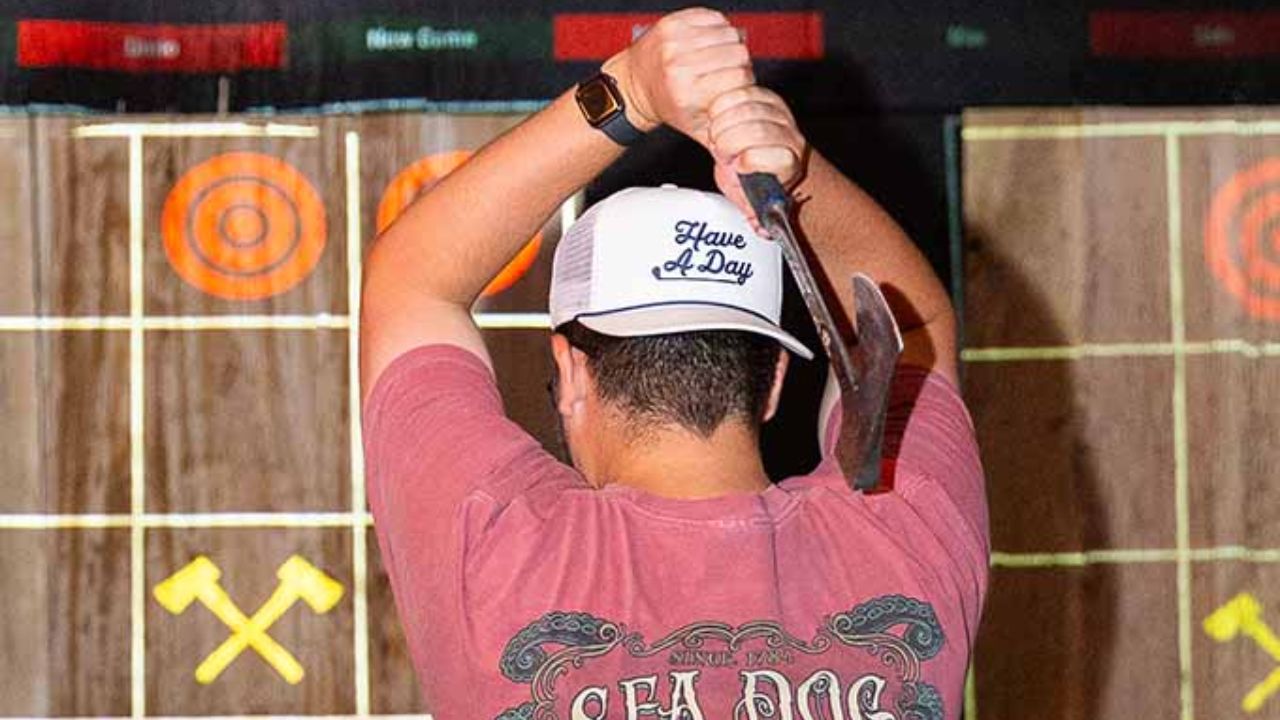
That’s why choosing the right venue matters. Professional facilities like Montana Nights offer guided axe-throwing sessions as part of their event experiences. The setup, staff training, and safety culture make a real difference.
Who Should Try Axe Throwing?
One of the most common doubts we get is who should even try axe-throwing. You might wonder if it’s for you. At places like Montana Nights Axe Throwing, we welcome people from anywhere starting from 10 years old and up; however, they need to be accompanied by their parents or guardians.
Axe throwing is also one of the best activities to be included in events like:
- Date nights
- Corporate team building
- Birthday groups
- First-time visitors
- Competitive friends
You do not need upper-body strength for the activity, but technique matters more than force.
So, Do You Still Think Axe Throwing is Dangerous?
You started with a fair question. Is axe throwing dangerous? While it is not dangerous, the honest answer depends on where and how you do it. In a structured, supervised venue, it’s built around safety systems and is no more extreme than bowling or darts when managed properly.
So, don’t let the image of an axe scare you. Rather, take this chance to try something surprisingly fun and new.