
If you want to practice axe throwing but without going to a specialized venue, you can build one for yourself. Building an axe throwing target at home is much easier than you think. All you need is some basic tools, clear measurements, and the right wood to build the perfect target.
If you are thinking about trying axe throwing for fun, training, or to prepare for a real experience like the guided axe throwing offered by Montana Nights, this guide will walk you through the full decision without hype or guesswork.
Understanding What Makes a Good Axe Throwing Target
A good axe throwing target does three things well. It catches the axe, it stays alive after hundreds of throws, and it keeps people standing behind the throwing line safe.
Wood choice matters more than almost anything else. Soft woods let the blade sink in and release cleanly. Hardwoods fight back and cause dangerous rebounds. That is why professional ranges almost always use end-grain rounds or vertical planks of soft lumber.
Another detail beginners miss is moisture. Wood that is too dry becomes brittle. Wood with a little moisture grips better and heals itself between throws. Many experienced throwers lightly mist their targets, especially in dry climates or during winter.
Materials You Need to Build an Axe Throwing Target at Home
You do not need a workshop or specialty gear. Most of this comes from a hardware store, and some of it may already be in your garage.
Here is a beginner-friendly materials list that mirrors what guides recommend in the field:
- Soft wood boards like cottonwood, pine, poplar, or spruce
- Four to six boards, each 2 inches thick and 10 to 12 inches wide
- Two horizontal support boards for the back
- Wood screws, 3 to 4 inches long
- A drill and a basic screwdriver bit
- Measuring tape and pencil
- Safety glasses and gloves
This setup keeps the build affordable and easy to repair. When one board wears out, you swap it instead of rebuilding everything.
How to Build an Axe Throwing Target Step by Step
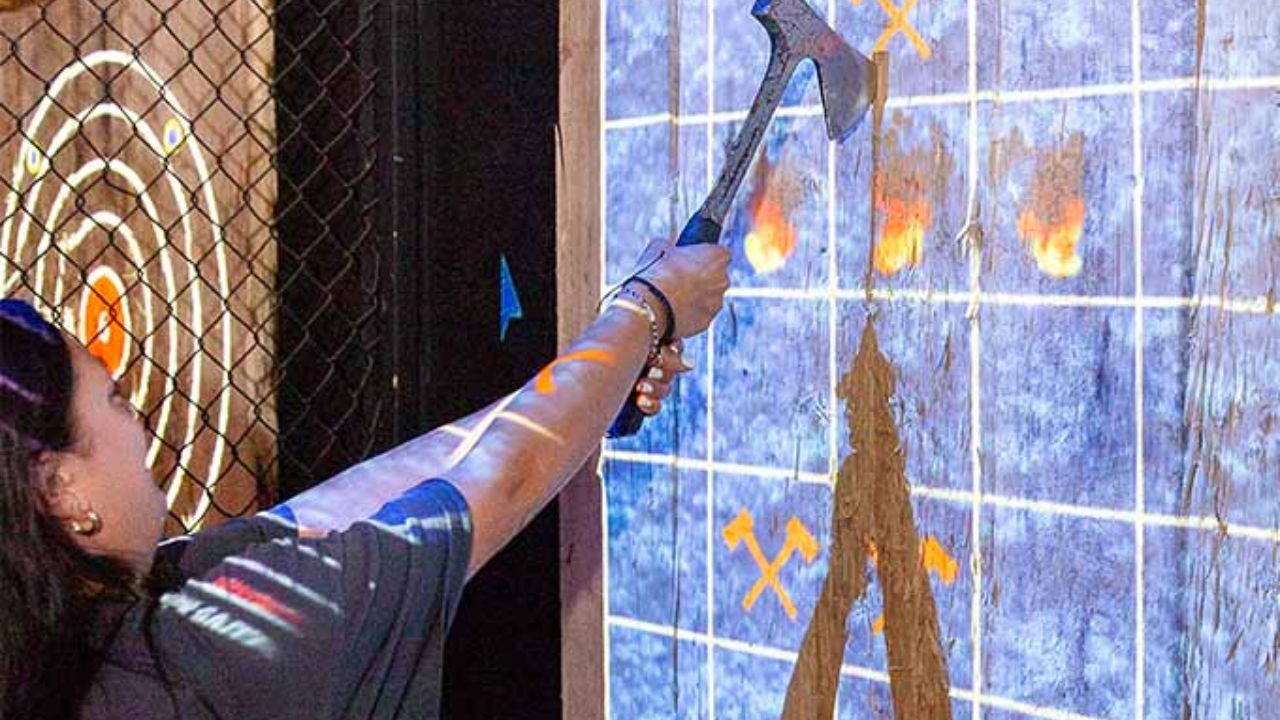
Step 1: Choose the Right Location Before You Build Anything
You need the right location before you get into the building process of the target. Decide where the axe throwing target will be placed. Think about safety first before placing it anywhere.
Pick a spot where there is a thick wooden fence or open land where a missed throw cannot reach people, pets, or windows. Indoor setups are possible, but only with professional-grade barriers. However, for beginners, the outdoors is safer.
Step 2: Select Beginner-friendly Wood that Grips the Blade
Wood choice is one of the biggest factors in whether your axe sticks or bounces.
Some of the best woods that work well for these targets are soft wood like pine, spruce, cottonwood, and poplar. They absorb impact and close back up after throws.
Avoid woods like oak, maple, or pressure-treated lumber. These are hardwoods that damage blades and cause dangerous rebounds.
Professional venues like Montana Nights use cottonwood and poplar interchangeably to offer the best axe-throwing experience to the throwers.
Each board should be:
- About 2 inches thick
- 10 to 12 inches wide
- Cut to the same height, usually 4 feet
Uniform boards help the target wear evenly and stay flat over time.
Step 3: Lay Out The Boards Tightly With No Gaps
The next step is to lay all vertical target boards on a flat surface. Push them together so they touch edge to edge.
Gaps are a beginner’s mistake that causes cracked wood and loose blades. Tight seams let the axe bite cleanly and release safely.
This step feels slow, but it determines how long your axe throwing target survives.
Step 4: Attach Horizontal Supports Slowly And Evenly
Next, place two horizontal support boards across the back of the vertical boards. One should sit about 6 inches from the top. The other is about 6 inches from the bottom.
Drill pilot holes before inserting screws. This prevents splitting and keeps the frame square.
Drive screws in gradually, alternating sides so pressure stays even. Do not over-tighten, as the wood needs room to expand and contract with moisture.
If the target feels weak, add a third support across the middle.
Step 5: Stand The Target Upright And Stabilize It
Once assembled, stand the target upright and check stability. It should not wobble or lean.
For freestanding setups:
- Brace the target against a solid structure
- Use angled support legs
- Anchor the base with sandbags or stakes
Never rely on weight alone. Repeated impacts slowly shift targets that look solid at first. This step separates casual builds from safe ones.
Step 6: Set The Correct Target Height
Measure from the ground to the center of the target, and aim for about 60 inches.
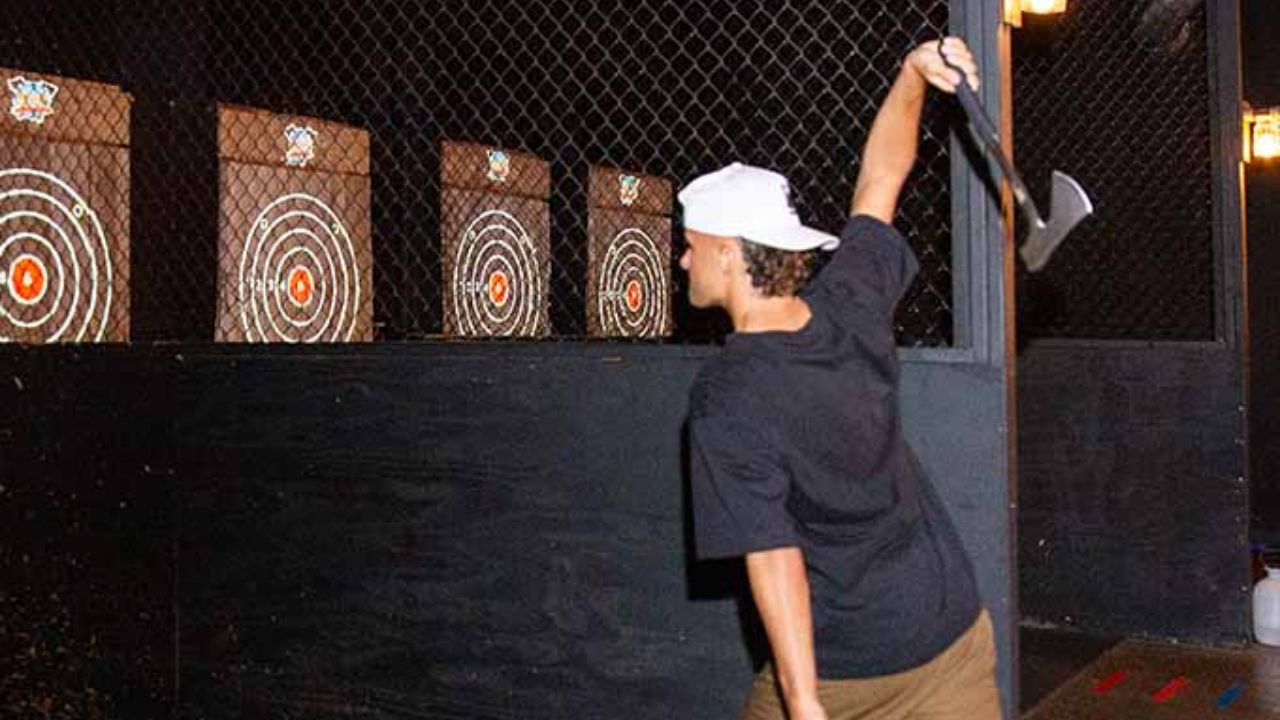
This height matches natural throwing angles for most adults and reduces wrist strain. Too high a target forces awkward releases, and too low a target force increases ground skips.
If multiple people will throw, this height is a reliable compromise. Commercial ranges rarely deviate from it.
Step 7: Mark Scoring Rings Light, Not Deep
To mark the scoring rings, use a pencil or light marker to draw rings if you want scoring zones. Do not carve or burn them in.
Deep grooves weaken boards and create split points. A faint guide is enough for beginners and keeps the surface healthy longer.
Step 8: Establish Throwing Distance For Beginners
Start with a throwing line about 12 feet from the target. This distance supports a clean single rotation throw with standard hatchets.
If axes hit the handle first, move slightly closer. If blades hit sideways, step back a few inches. Mark multiple lines so different throwers can adjust safely.
Step 9: Prepare The Target Surface Before Use
Before the first throw, lightly mist the target with water. Moist wood grips blades better and reduces cracking. In dry climates or hot weather, repeat this every session. This small habit dramatically extends target life and improves safety.
Step 10: Inspect Everything Before Throwing
Once everything is done, do a final check before anyone throws.
Make sure:
- All screws are tight
- Boards sit flush
- The target does not move when pushed
- The throwing lane is clear
This inspection becomes second nature over time. It is standard practice in guided axe throwing activities for a reason.
Safety Rules You Should Never Ignore
Axe throwing is safe when treated with respect and dangerous when treated like a party trick. Set clear rules, even if you are just throwing with friends.
Stick to these basics every time:
- One thrower at a time
- No one passes the throwing line until all axes stop moving
- Always throw, never toss or lob
- Inspect the axe head before each session
- Wear closed-toe shoes
These rules come straight from professional ranges and guided experiences. They are boring until the moment they save someone from a trip to the ER.
Maintaining Your Axe Throwing Target Over Time
Your axe throwing target is not a one-and-done build. It needs light care to stay safe and fun.
Every few sessions, spray the surface with water. This keeps the wood from drying out and cracking. Rotate boards if one area gets chewed up faster than others.
Check screws often, as wood movement can loosen them over time. Tighten gently and replace stripped screws right away.
When a board finally dies, discard it because it means you have been throwing enough to earn the wear.
Is Building Your Own Target Worth It
This is the moment where many people stop for a while and wonder, “Should I build one, or just book a guided session somewhere?”
Building your own target saves money long term and lets you practice anytime. It also teaches respect for the sport because you see how setup affects safety.

On the other hand, guided experiences like those offered by Montana Nights remove all guesswork. You show up, throw, learn, and leave with good memories and all your fingers intact.
A smart path for many beginners is both. Try a professional session first. Learn from and safety, and then build your own setup with confidence.
Common Beginner Mistakes And How To Avoid Them
Most problems show up in the first week. The good news is they are easy to fix once you know what to watch for.
Here are mistakes beginners make all the time:
- Using hardwood because it seems stronger
- Standing too close or too far without adjusting
- Throwing too hard instead of focusing on rotation
- Ignoring worn boards until they split
- Letting multiple people throw at once
Every one of these shows up in backyard setups. Everything is avoidable with patience.
Bringing The Outdoor Experience Home
There is something deeply satisfying about building a target, stepping back, and landing your first clean stick. It taps into the same feeling people chase when they book outdoor activities or wilderness experiences.
That is why axe throwing pairs so well with other rugged, hands-on adventures like campfire cooking or guided outdoor challenges.
If you take your time, respect safety, and build smart, your target becomes more than wood and screws. It becomes a place where skills grow, and stress fades.