
Most first-timers worry about arm strength before they walk in. That’s a fair concern, but nobody wants to gas out after ten throws or look awkward in front of friends. But the weight is rarely the problem. The real problem during your first session is grip tension, release timing, and distance.
Most beginners are surprised that axe throwing does not feel as heavy as expected. The average throwing axe weighs about 1.5 pounds, which feels lighter than many people expect during a first session.
Is Axe Throwing Heavy? Here’s the Actual Answer
The axe itself is not what wears beginners down. The average recreational hatchet used at venues weighs about 1.25 to 2 pounds. That sounds heavy but it does not feel heavy once you start throwing, and most people adjust within five minutes.
What actually tires beginners is gripping too hard. That is the part nobody explains well. People squeeze the handle like they are trying to crack it in half. Then their forearm burns after twenty throws. At Montana Nights Axe Throwing locations in Connecticut, the AxeMaster usually fixes this first by spending time in teaching the right techniques to throw an axe. A looser grip gives the axe cleaner rotation and saves your arm. This may sound too simple, but most beginners never try it.
The throw should feel smooth, not forced.
The 5 Things That Actually Determine Your First Session
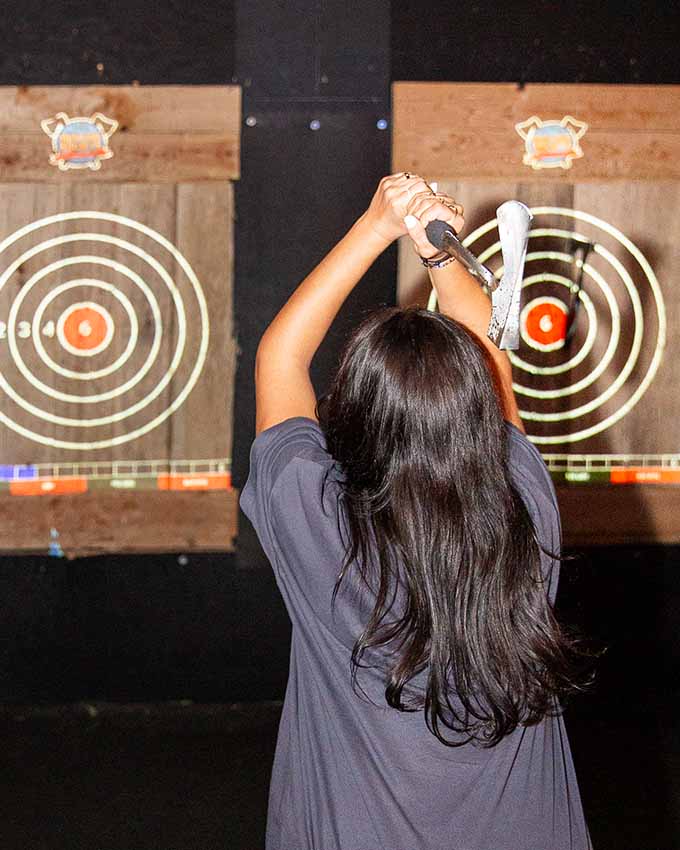
Most beginners think success depends on strength, but it does not. A clean throw depends on timing and rhythm far more than muscle. That is why smaller people often stick axes faster than gym regulars during mixed group sessions.
The good news is that beginners improve quickly once these five things click. At places like Montana Nights in Southington and Putnam, coaches see the same mistakes every night, and honestly, the fix is usually small.
1. Grip Pressure Matters More Than Power
A tight grip kills rotation as the axe leaves your hand late and slams flat into the board. Beginners often think harder throws solve this problem, but it does not. A relaxed hand lets the axe rotate naturally. Even at most venues, the coach will ask you to loosen your fingers almost immediately.
2. Your Wrist Should Stay Locked
Axe throwing is not a baseball pitch. Your wrist should stay steady through the release. Beginners flick their wrist because it feels natural. Then the axe spins wildly or misses low. Why does this happen so often? Because people try to guide the blade instead of letting the rotation happen.
3. Release Timing Controls Everything
Release too early and the axe goes too high, and release too late and it drops flat. This part frustrates people during the first twenty minutes. Especially when one throw sticks perfectly and the next three bounce back.
4. Distance From the Target Changes Rotation
Most venues place beginners around 12 to 15 feet away. But moving even one foot changes the rotation speed. If your axe keeps hitting handle-first, you may stand too close. If it over-rotates, step forward slightly.
5. Using the AxeMaster Changes Your Session
This is the biggest one, and the most ignored. Every lane at Montana Nights has a coach nearby during sessions. Ask them to watch one throw, not ten. They can usually spot the issue immediately. Most beginners keep guessing instead.
Does Strength Actually Matter?
No. You do not need to be strong to enjoy axe throwing.
The motion works more like a pendulum swing than a power throw. A smooth release beats raw force almost every time. That is why many first-timers who look nervous end up throwing well within the first session.
A lot of beginners picture heavy lumberjack axes from old cartoons. But recreational throwing axes are compact and balanced for rotation. You are not chopping wood, but guiding spin toward a target about twelve feet away.
What to Wear and Expect for Your First CT Session
The setup is simpler than most people expect.
Closed-toe shoes are the main requirement at almost every venue. Wear sleeves that move easily and avoid bulky jackets. That is really it. You do not need gloves, workout gear, or special equipment. The venue supplies the axes and safety briefing.
Most beginner sessions run about 60 to 75 minutes. The first ten minutes usually cover safety and throwing basics. After that, the session turns into games and target challenges. At Montana Nights locations, two people can throw side by side in the same pit while others wait behind the fenced area. The pace feels casual once everyone settles in.
How to Get the Most Out of a Beginner Session
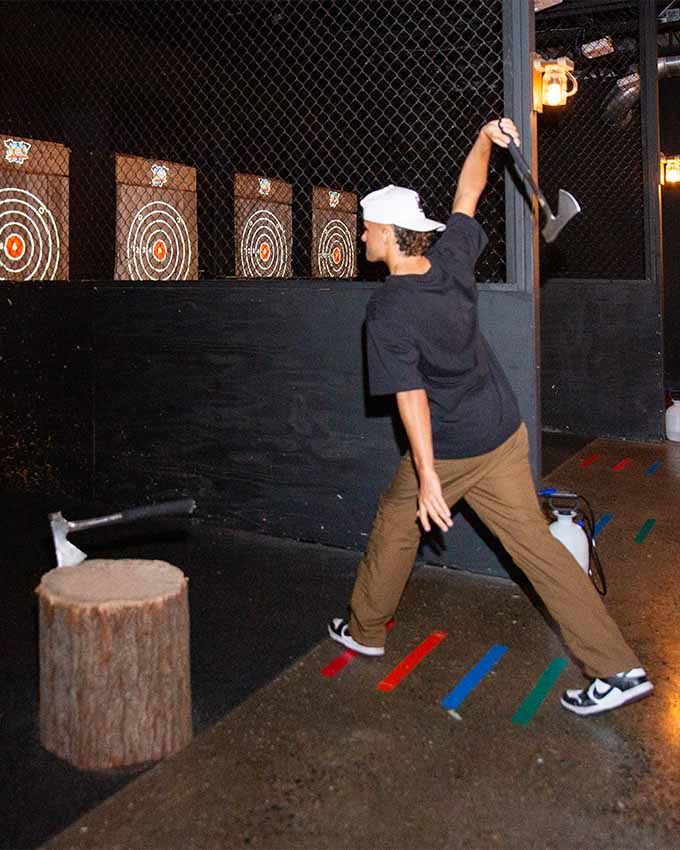
Most first sessions go wrong for one reason, and that is that the people start forcing the throw after a few misses.
That frustration usually shows up around throw fifteen or twenty, when the axe bounces back, and somebody laughs nervously. Then the beginner grips harder and throws faster which is a bad move. The tighter the throw becomes, the worse the rotation gets. It spirals quickly from there.
The best beginners reset instead. They pause for ten seconds, shake out their hand, and then they ask the coach to watch one throw closely.
A good beginner session feels relaxed once rhythm takes over. That rhythm matters more than scoreboards or bullseyes during your first hour.
Here are four simple ways to improve faster during your first session:
- Slow down your throw speed: Fast throws rarely help beginners. A smooth motion creates cleaner rotation.
- Watch the axe handle, not the blade: The handle shows rotation speed better than the blade itself.
- Take one adjustment at a time: Do not change grip, stance, and distance together. That creates confusion fast.
- Ask the coach after three misses: Not after twenty. Small fixes early save huge frustration later.
That approach changes the whole mood.
Final Thoughts
Axe throwing feels far less physical than most beginners expect. The axe is light, the motion is controlled, and the learning curve moves quickly once your timing settles in. People who walk in worried about strength usually leave talking about rotation, release point, and that one perfect throw that finally stuck cleanly into the board.
The biggest shift happens when beginners stop trying to overpower the throw. A relaxed grip and one small coaching adjustment can change everything within minutes.
So before your first session, forget the lumberjack image in your head. The real challenge is staying loose enough to trust the motion.
FAQs
Q1: Is axe throwing hard for complete beginners?
No. Most beginners stick an axe within the first session. The hardest part is timing, not strength.
Q2: How heavy is a throwing axe at most venues?
Most recreational throwing axes weigh between 1.25 and 2 pounds. They feel lighter once you start throwing regularly.
Q3: Can kids or smaller adults do axe throwing?
Many venues allow teens with supervision, though rules vary by location. Smaller adults usually do fine because technique matters more than force.
Q4: What should beginners avoid during axe throwing?
Avoid gripping too tightly and throwing too hard. Both mistakes hurt rotation and accuracy.
Q5: How long does it take to learn axe throwing?
Most people improve within 20 to 30 minutes during a beginner session. Consistency builds quickly after a few clean throws.