
You might have used an axe at least once in your life, whether for chopping something or something recreational like axe-throwing. But have you wondered about the different parts it has? An axe has 10 main parts, and each one affects how the tool cuts, balances, and feels in your hands.
Many people think an axe is a simple tool consisting of a blade and a handle. But it has many details to it, and those details matter more than people expect.
If you plan to chop wood, explore outdoor skills, or try axe-throwing, knowing the parts of an axe helps a lot. It improves control and safety. It also helps you choose the right tool.
So, now, let’s break it down step by step.
Why Understanding the Parts of an Axe Matters
Most beginners focus only on the blade, and that makes sense because the blade is the most important part.
But the truth is, every part of an axe works together. The handle controls balance, the head provides power, and the blade makes the cut.
Many first-time visitors at outdoor venues learn this quickly. During guided sessions like those offered by Montana Nights Axe Throwing, AxeMasters often start with axe basics before the first throw. Once people understand the structure, they feel more confident.
When these parts work well together, the axe feels natural.
Understanding this helps you:
- Choose the right axe
- Swing with better control
- Maintain the tool properly
- Avoid common beginner mistakes
Now let’s look at the actual parts.
1. Axe Head
The axe head is the heavy metal section at the top. It delivers the force during a swing. Most axe heads are made from hardened steel.
Weight matters here, but a heavier head creates a stronger impact. But balance matters just as much. A well-balanced axe head feels stable when you swing. It does not twist or wobble.
You will notice this difference quickly when holding different axes.
2. Blade (Bit)
The blade, also called the bit, is the cutting edge.
This is the part that slices into wood. The sharpness of the blade determines how easily it cuts. A sharp blade enters wood smoothly, while a dull blade often bounces or sticks.
Good blades usually have:
- a clean edge
- a gentle curve
- strong steel construction
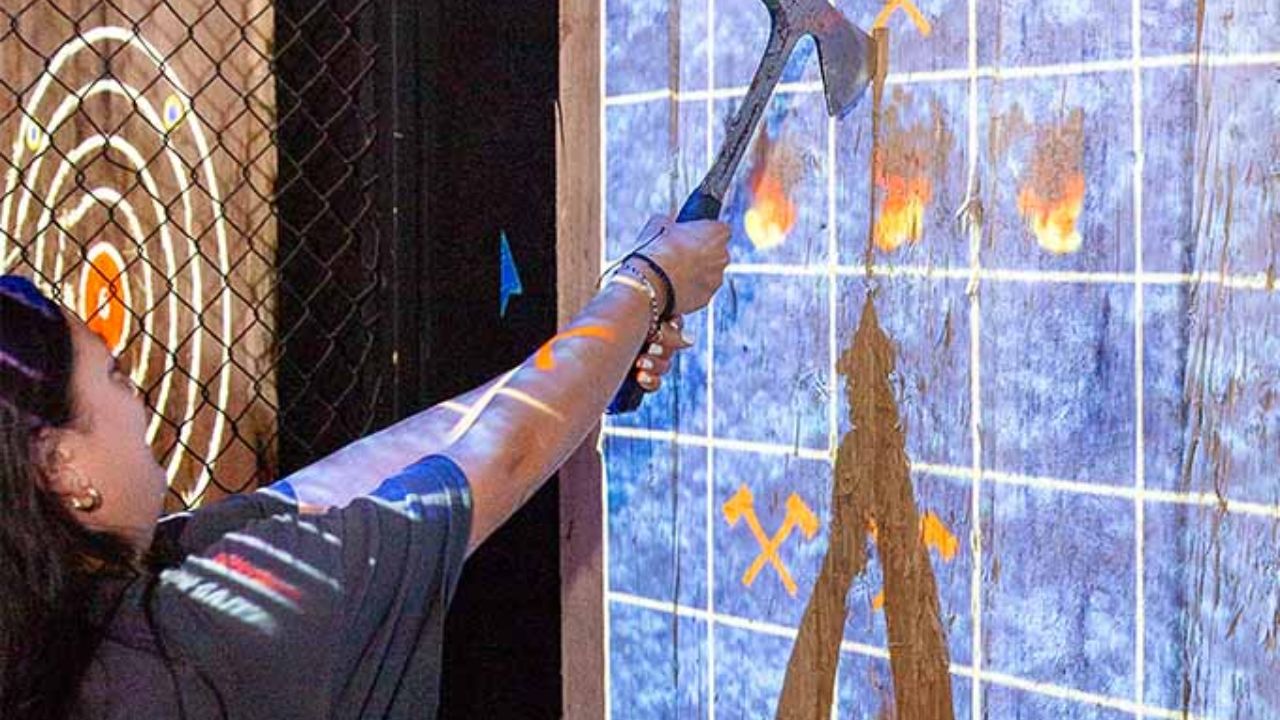
Axe-throwing axes are slightly different. They are sharp enough to stick to the target, but not razor sharp.
3. Poll
The poll is the back side of the axe head. It sits opposite the blade and usually has a flat surface. Some axes allow light hammering with the poll, while the others use it only for balance.
In throwing axes, the poll helps control rotation. The balance between the blade and poll affects how the axe spins. Even small design changes can affect accuracy.
4. Cheeks
The cheeks are the two sides of the axe head. They connect the blade to the eye and help move wood apart. The thickness of the cheeks affects performance.
Thin cheeks work better for chopping, while thick cheeks work better for splitting logs. When wood starts to open after a strike, the cheeks help push it apart.
That simple design improves efficiency.
5. Eye
The eye is the hole inside the axe head. This is where the handle fits. The eye is usually oval-shaped. This shape is strategically made so that it prevents the head from twisting.
The handle is secured inside the eye using wedges, keeping the head tight during use. If the fit becomes loose, the axe can become unsafe.
A tight eye connection is essential for safety.
6. Handle (Haft)
The handle, also called the haft, is the part you hold. Most traditional handles use hardwood like hickory. Modern axes sometimes use fiberglass.
Handle length affects power and control. Short handles provide better control, and long handles create stronger swings. Shorter axes are common in axe-throwing activities. They are easier for beginners to manage.
Visitors trying throwing experiences through Montana Nights Axe Throwing often start with these shorter axes. They feel balanced and easy to grip.
7. Shoulder
The shoulder is the top part of the handle below the head. This part supports the connection between the handle and head.
It transfers force during a swing and helps prevent the handle from cracking. Many handles look slightly thicker at the shoulder. That design improves durability.
Without it, the handle would weaken faster.
8. Throat
The throat sits just below the shoulder. It is usually the narrowest part of the handle. This area improves grip control, as many users naturally place their hand here.
The narrower shape allows better guidance during a swing. For throwing, this section helps control rotation and release. Once you notice it, you will see it on most axes.
9. Belly
The belly is the curved section in the lower handle. This curve helps your hands grip comfortably. It also helps absorb vibration when the axe strikes wood.
A straight handle can feel harsh during repeated swings. A curved belly reduces that shock. That small detail makes long sessions easier on your hands.
10. Knob (Butt)
The knob, also called the butt, sits at the bottom of the handle. It usually flares outward slightly, and this shape prevents the axe from slipping out of your hand.

During strong swings, your hand presses against the knob. That improves control and safety. Many throwing axes include a pronounced knob for the same reason.
It helps beginners maintain grip during throws.
How These Parts Work Together
Each part has a clear purpose. But the real value comes from how they work together.
A well-designed axe combines:
- A balanced head
- A strong handle
- A sharp blade
- A secure eye connection
When these elements align, the axe feels natural to use. You do not have to fight the tool because it moves smoothly with your swing.
That balance becomes obvious during axe-throwing. If the axe is balanced well, it rotates cleanly toward the target, and beginners often notice this during their first throwing session.
Learning Axe Basics Through Experience
Reading about axes helps. But real understanding comes from using one. There are guided sessions for beginners where the AxeMasters explain safety, technique, and basic axe structure.
Experiences like those offered by Montana Nights Axe Throwing combine instruction with fun outdoor activities.
Most sessions include:
- Safety instructions
- Basic axe handling
- Simple throwing techniques
- Guided practice
Within a few throws, most beginners hit the target. And once that first axe sticks in the wood, people usually want to keep going.
Throw Axes Knowing It Completely
Knowing these parts changes how you look at the tool. So, the next time you hold an axe, take a moment. Look at the handle curve, notice the blade shape, and feel the balance in your hands.
And then ask yourself something simple.
Does this axe feel ready to work, or ready to fly toward a target?